Where Do ITC and PTC Solar Credits Stand in 2026?
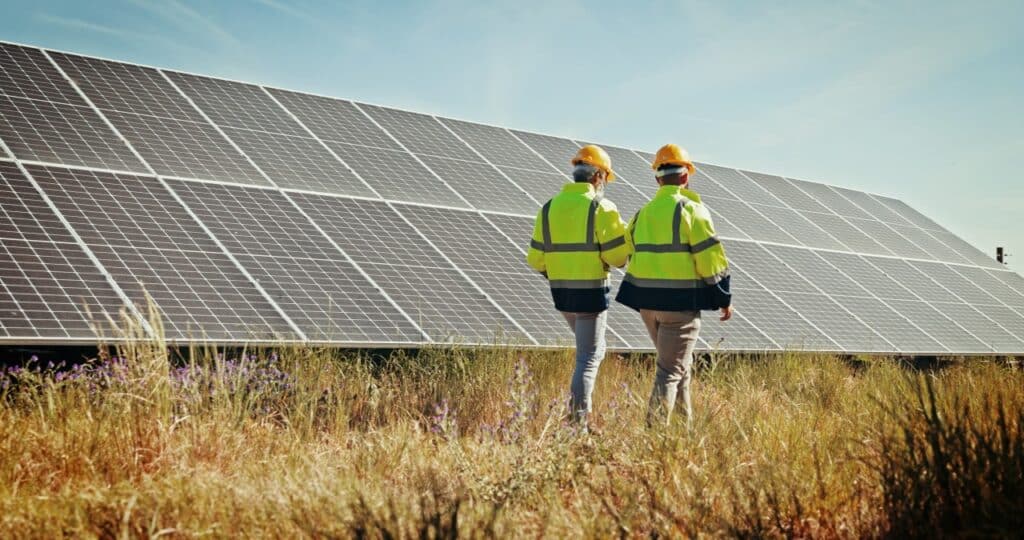
When President Donald Trump signed the One Big Beautiful Bill Act (OBBBA) last July, sweeping changes blasted the renewable energy industry.
For an industry seemingly finding its stride, the OBBBA was a baseball bat to the knees. Nearly every sector was impacted, including solar, and developers, manufacturers, and consumers alike suffered.
And while it’s true that misery enjoys company, the changes leave developers and consumers scratching their heads. Unfortunately, the solar industry must now find ways to expand with less federal help.
Tax Credits Fading Out
At a time when AI growth is causing electricity use to soar, the solar industry lost part of its appeal.
The OBBBA brought drastic changes to tax credits and incentives for investing in solar projects. Most notably, it shortened the sunset dates for critical ITC and PTC credits originally extended by the Biden administration.
But where does the industry stand in 2026, and what can we do to preserve years of positive momentum?
Residential Solar
If any part of the solar industry took the brunt of the changes, it was the residential solar sector.
Under the Inflation Reduction Act, homeowners were eligible for a 30% federal tax credit applied to the cost of their solar installations and battery storage projects. However, to receive the credit for a battery project, applicants had to meet several requirements, including:
- 3 kWh installed with a new or existing solar project
- Exclusive solar charging for the first year
Most notably, the Residential Clean Energy Credit (Section 25D) ended in December 2025.
Once the OBBBA took effect, homeowners scrambled to get solar projects installed and operating by the December 31 deadline. Those who beat the buzzer and got their projects finished weren’t fully in the clear, however. To fully qualify, homeowners had to own the system AND have an income tax liability for the tax year.
How Did the Industry React?
Homeowners were left scrambling when news broke that the residential ITC cliff was approaching in a matter of months.
With a short deadline, homeowners rushed to get solar projects online to take advantage of the ITC. Projects that missed the deadline weren’t as lucky, missing out on the 30% federal tax credit.
Despite losing a massive residential solar incentive, there is still another way to qualify for savings. If they choose to, residents can invest in solar through commercial companies. In this scenario, businesses can claim a 48E tax credit through leases and power purchase agreements.
The 48E tax credit does two things that help residential solar development. First, companies get to take advantage of federal tax incentives to encourage development. Secondly, businesses receiving the credits can pass along those savings to residents as lower-cost power.
Where Does Residential Solar Stand Today?
Without federal tax benefits, today’s homeowners are in a worse position than they were a few short months ago.
Luckily, residents have a few other cost-saving avenues to make going solar more affordable. A growing number of states are stepping up to the plate, instituting trust funds, assistance programs, and other incentives.
For those interested in going solar, the N.C. Clean Energy Technology Center’s DSIRE database outlines available state and municipal solar incentive programs.
Commercial and Utility-Scale Solar
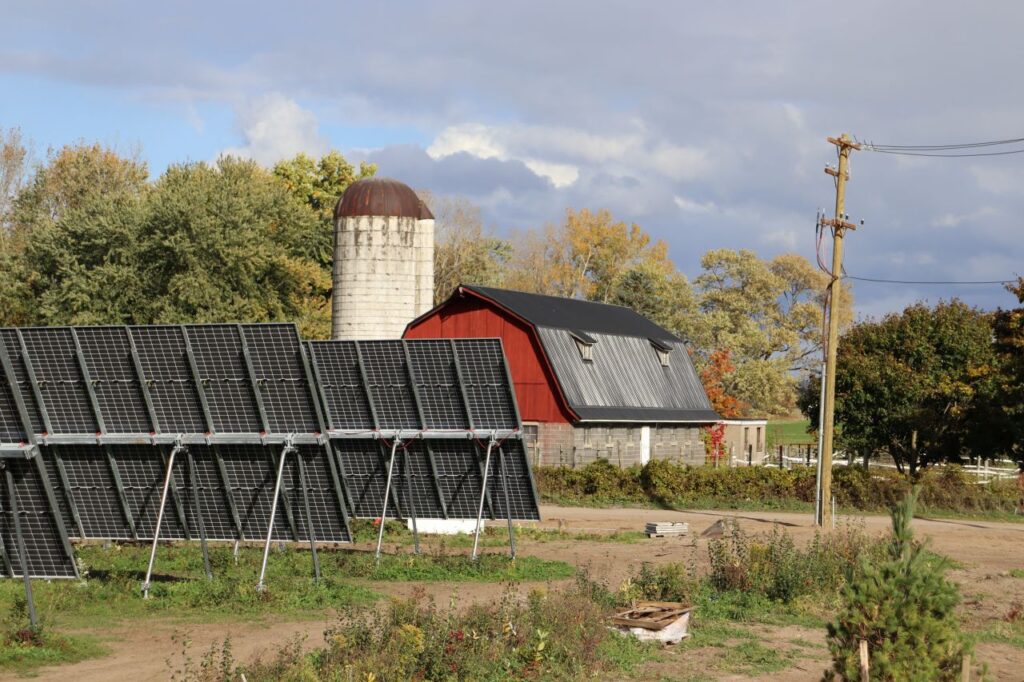
Commercial and utility-scale solar didn’t suffer as much as residential, but developers are still licking their wounds.
The problem here isn’t the elimination of crucial tax credits, but rather the timing of them. Under the Inflation Reduction Act, ITC and PTC credits were in place at current levels until 2032. Afterwards, there was a gradual multi-year sunset period.
This is no longer the case with the OBBBA. Under the new law, Section 48E ITCs now face a cliff at the end of 2027. The timeline is drastically shorter, forcing companies to move projects along much more quickly and with fewer protections.
For a wind or solar energy project to qualify for a 48E or 45Y credit, construction must begin by July 4, 2026. But the July 4 cutoff is more than a convenient deadline. Starting before then allows developers to qualify for a four-year safe harbor, giving them more time for the job.
But missing the start date cutoff has dire consequences. Any projects started after July 4, 2026, must be fully operational by December 31, 2027. For large-scale utility projects, the timeline might be nearly impossible. Smaller community installations, however, could meet the December 2027 deadline with an efficient process.
Are Safe Harbors Still Safe?
Although developers and EPCs still have access to safe harbor coverage, they still pose issues.
For example, the IRS recently changed the “Five Percent Safe Harbor” rule following Trump’s Executive Order 14315. Also known as “Ending Market Distorting Subsidies for Unreliable, Foreign-Controlled Energy Sources,” the E.O. says, in part:
“This includes issuing new and revised guidance as the Secretary of the Treasury deems appropriate and consistent with applicable law to ensure that policies concerning the “beginning of construction” are not circumvented, including by preventing the artificial acceleration or manipulation of eligibility and by restricting the use of broad safe harbors unless a substantial portion of a subject facility has been built.”
So, what does this jargon mean, and what does the government now consider “appropriate and consistent?”
In short, solar developers must use physical work tests exclusively to prove work of a “significant nature.” Thankfully, the thresholds apply to both on-site and off-site processes, including manufacturing parts and system installation. However, preliminary work like planning, research, financing, testing, permitting, and clearing land is NOT included.
Although the IRS changed the rules, low-output solar facilities (less than 1.5 MW) still fall under the Five Percent Safe Harbor rules.
Batteries Avoid the Brunt of Rule Changes
In a surprising twist, battery storage is largely safe from new rules instituted by the OBBBA.
Battery storage projects keep their tax credits through 2033, but installations must comply with Foreign Entities of Concern rules. The rub here is that many of the companies and businesses in the battery storage supply chain fall within FEOC.
China is one of several countries deemed a “covered nation” in the FEOC, which also includes North Korea, Russia, and Iran. Though every case is different, companies involved with these four countries typically don’t comply with the rules. The result is an industry forced to find alternative solutions to meet domestic and friendly-nation production.
Domestic battery manufacturing is still a nascent industry in the U.S., so short-term availability and sourcing may struggle. The good news is that as near-shore and onshore production picks up steam, we could see long-term availability.
New Year, New Taxes
Finally, 2026 also brings a few other new tax surprises, including Prohibited Foreign Entity (PFE) rules.
Introduced in the OBBBA, the PFE rules impact the 48E ITC, 45Y PTC, and 45X manufacturing tax credits, among others. Basically, the rules prevent Specified Foreign Entities (SFE) and Foreign-Influenced Entities (FIE) from claiming tax credits. Similar to the FEOC rules, SFEs include China, Russia, North Korea, and Iran.
Businesses should also be careful around the new Applicable Payment Rule, which states that if an SFE is paid in a way that benefits them and grants control over a facility, the taxpayer can’t claim credits. The reason this rule is important is that it’s effective within the first 10 years of a site entering service.
Operators must be aware of every company they work with, because one mistake could lead to trouble. For example, if an operator makes site maintenance payments to an SFE-associated company, the IRS can potentially claw back 100% of the claimed ITC.
Finally, there are new Material Assistance Cost Ratio Rules, which restrict the percentage of products sourced from PFEs for projects. Though similar to the domestic content rules we’re already familiar with, there is a key difference between the two. Unlike domestic content thresholds, Material Assistance rules cap total PFE components at 40%; otherwise, companies lose the credit.
Additionally, the percentage of non-PFE content increases annually, making the benchmark harder to reach.
Solar’s Fight Continues
The One Big Beautiful Bill Act was a shot across the bow for solar and wind companies. However, it also generated opportunities for the industry to find creative solutions to complex energy production problems.
Though residential solar lost its investment tax credits, homeowners can still participate in solar energy through PPAs and leases. They also have access to many state and local incentives, provided they know where to find them.
At the same time, utility-scale and community solar companies have until December 2027 to complete their projects. Without a safety net, the best option most projects have now is to break ground before July 4, 2026. That would allow them to activate safe harbor rules and buy additional time. Similarly, battery storage may become more popular as it maintains its tax incentives, albeit with a few more strings attached.
The point is, even though solar took a hit from the federal government, the future remains strong for renewables. Electricity generation and demand are issues in the U.S., and the grid is inflexible and unreliable. Meanwhile, tech companies have employed solar solutions to power massive data centers.
At this point, the solar industry is entrenched in the United States. Despite headwinds, more doors will open for solar companies, either at the state or even local level. It’s just a matter of time.