NEC 2026: What Solar EPCs and Installers Should Know

Every three years, the National Fire Protection Association (NFPA) updates NFPA 70, AKA the National Electrical Code (NEC).
True to its name, the NEC covers every facet of electrical safety, and each release brings new changes, additions, and clarifications. For the solar industry, Section 690 comprises the bulk of our guidelines, though other sections, including Section 705, also apply.
When the NFPA released NEC 2026, there were fewer widespread changes for the solar industry than in previous rounds. This is welcome news for developers and operators, because as the industry matures, the rules governing it have become more stable across the solar landscape.
For EPCs, developers, and operators, seeing so few tweaks to Section 690 is a boost after several rounds of wholesale changes. But what exactly has changed in the most recent NEC, and what do solar EPCS, installers, and operators need to know?
Diving Into NEC Section 690
Most of the minor changes made to Section 690 were meant to clarify or simplify rules for installers.
Section 690.4 – General Requirements
The largest change in this section simplifies calculations with fractions of volts or amperes.
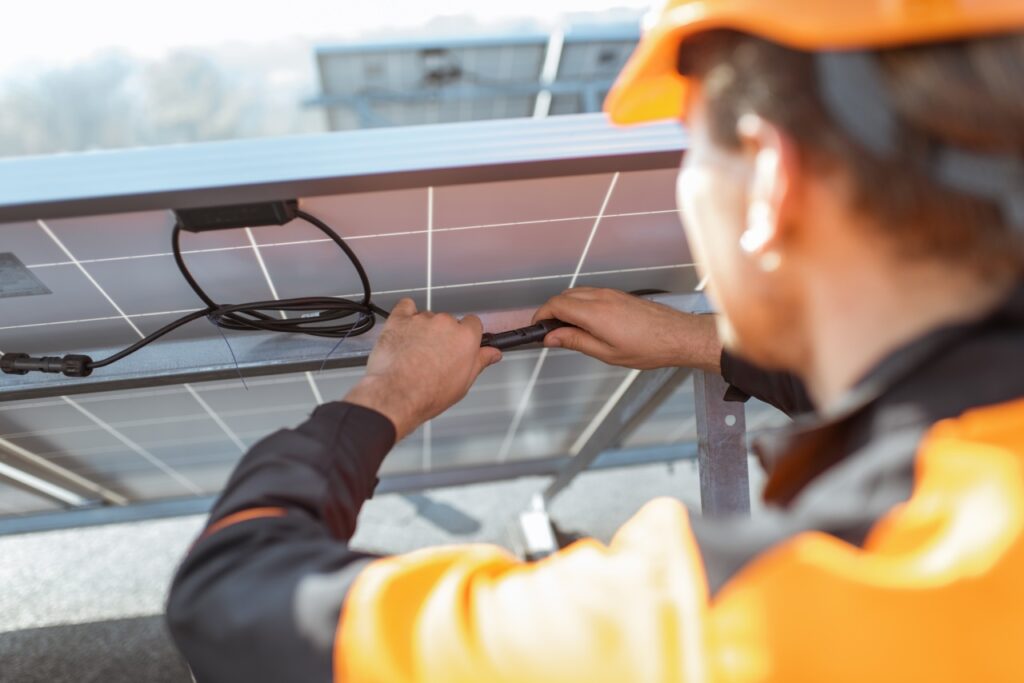
Under the updated rules, workers can round their final calculations to the nearest whole number when less than .5 volts or amperes. A similar rule already applies to other NEC sections about branch circuits, and now also applies to PV installations.
So, how does the new regulation work? Let’s say the final calculation for a given circuit’s current is 10.3A. Under the new NEC provisions, you could round the current down to 10A.
The change has several applications for electrical workers. Voltage calculations help determine temperature limits, while current dictates temperature or conduit fill rules.
Section 690.8 – Circuit Sizes and Current
In Section 690.8, there are changes to maximum currents, mainly in reference to minimum wire sizes.
Under the 2023 NEC, PV systems over 100kw could employ electrical engineers to help determine maximum currents. Once completed, those engineers would need to document and stamp any work they did. NEC 2026 offers similar language but removes the 100kw size reference. This means any size project can use calculations furnished by an electrical engineer.
So, why does the project size and engineer documentation matter? Section 690.8 outlines the smallest conductors a project can safely use. By removing the 100kw barrier, it opens the doors for smaller projects to find cost savings on their sites.
Keep in mind that minimum wire size calculations may not change much for smaller projects. There is definitely value, however, for large-scale projects using miles of large-gauge copper wire.
More in Section 690.8
Section 690.8(A)(2) covers terminating circuits to Electronic Power Converter (EPC) Inputs.
EPCs are generally inverters in a PV system. When workers size conductors for termination at the input of an inverter or another electronic, there’s math to do. Typically, we take our PV values and multiply them by 125%, then again by 125%. In total, we’re multiplying values by 156% to determine conductor size for the current they’re carrying.
Changes in this section allow workers to use conductors that more closely match the currents they’ll likely carry. It also aligns more closely to how electricians in other fields handle current sources, including overcurrent protection devices (OCPDs).
Under NEC 2026, the update rule streamlines the process. Now, the maximum current can match the EPC’s rated input current if it meets one of several criteria, including:
- If an OCPD not exceeding the conductor’s ampacity protects the terminating circuit to the EPC
- If the circuit’s maximum current complies with Section 690.9(A)(1)
- If the circuit is 690.9(A)(3) compliant
The good news here is the new 690.8(A)(2) rule may reduce the conductor size needed for an inverter or combiner box setup. In that case, projects could see lower overall PV wire costs.
Section 690.13 – PV System Disconnecting Means
The update to Section 690.13 now requires disconnecting means to be in line with Section 705.20.
Per Section 705.20: If the power source service disconnecting means meets the requirements of both 705.11 and 705.20(A) through 705.20(F), a separate source disconnecting means is not required.
According to Section 705.20, installers can use breakers to cut the power to a solar system, rather than knife switches. Knife switches are an expensive add-on, so utilizing another available common cut-off method reduces overall installation costs.
The changes simplify the rule, allowing a single disconnecting means to disconnect multiple power sources, including the PV system. Doing this reduces the need for an expensive shutoff system specifically for PV panels.
Cost is important, but the bigger win is that solar energy sources are finally on par with other power sources like generators and batteries.
Section 690.31 – Wiring Methods
Traditionally, PV DC circuits couldn’t share a housing with non-PV circuits. That has changed slightly in the NEC 2026 guidelines.
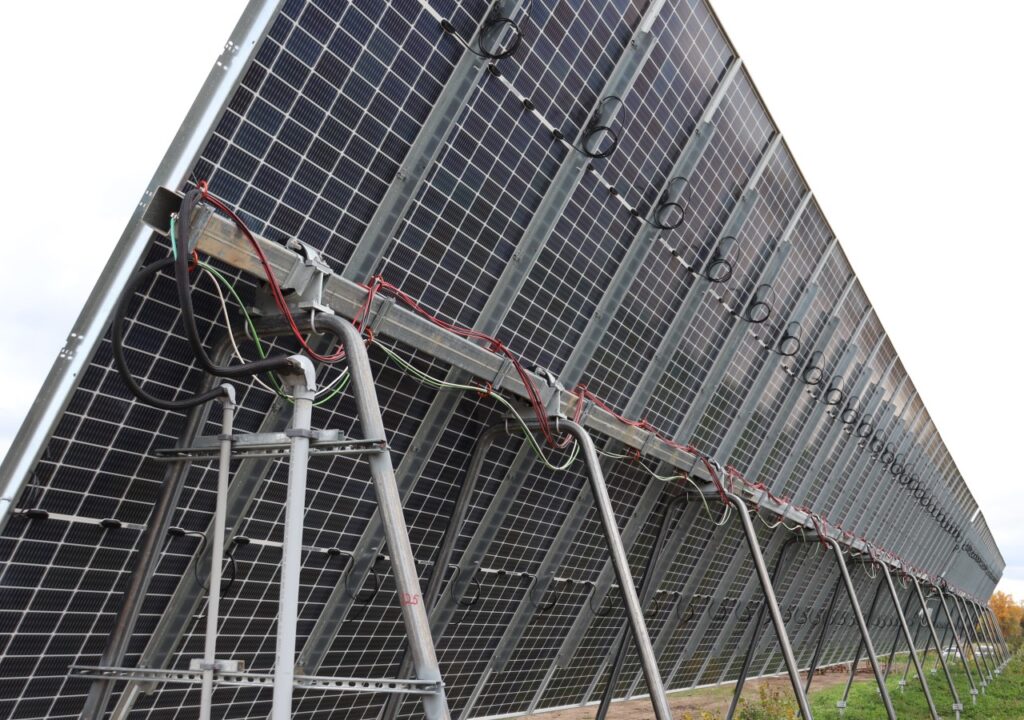
In some cases, PV and non-PV circuits can share a raceway, but only if there’s a partition to separate them. The goal is to keep everything operating safely, so the partition keeps wires where they belong. However, one rule of thumb is to ensure the voltage is the same across both wire types.
According to Section 690.31, the code states: The other circuit conductors are part of a multiconductor jacketed cable with a jacket insulation rating equal to at least the maximum circuit voltage applied to any conductor installed within the same wiring method, and are used for remote control, signaling, or a Class 1 power-limited circuit associated with the PV system or energy management system.
Long story short, make sure to have the right protections in place if you plan to house PV and non-PV wires or cables in the same raceway.
More on Section 690.31
The next point of clarification impacts how wire is used in different applications.
NEC rules now state that PV wire is okay to use in any area you’d normally use RHW-2. In a solar energy system, RHW-2 can be a “hot wire,” carrying electricity from solar panels to inverters.
Additionally, we now have permission to use distributed generation (DG) cable where codes already allow tray cable (Type TC). However, to comply with Section 690.31(C)(1), conductors must follow a couple of rules, including:
- Support or secure exposed conductors using cable ties, straps, hangers, or another approved fitting
- If installed outdoors, use materials listed for outdoor applications
Workers must also support the wire every two feet, though they can secure wires larger than #8 AWG every 4.5 feet.
Section 705.11
Lastly, changes to Section 705.11 impact solar developers, but it’s more of a revert, if anything.
In NEC 2020, we saw language explicitly referencing conductor length limitations when interconnecting PV systems to service panels — in other words, connecting the solar system to the larger utility system via a service panel. However, the 2023 NEC rules changed the language in Section 705.11, dropping the length limitation.
Fast forward to today, and NEC 2026 has brought back the length limitation language from 2020. Now, total conductor lengths must be less than 10 feet when used in residential dwellings. Other applications allow for conductors up to 16.5 feet from the service panel to the PV system disconnect.
With that said, there are situations where conductors may be longer than 16.5 feet, but require cable limiters. These limiters provide additional short-circuit and fault protection for the entire system.
Keeping an Eye on 2029
There is no better time to worry about the future than today.
Now that the 2026 NEC is live, our attention shifts to 2029, when the NFPA plans to restructure the NEC. If you haven’t heard about the changes yet, you can find them listed in Annex L of the 2026 NEC.
According to the organization, restructuring does several things. First, it allows the NEC to better adapt to and support new and emerging technology. Under the current code, new technology doesn’t always neatly fit. Reorganizing the codes makes it easier for the NFPA to make changes and improves usefulness for electricians.
Some experts also believe a potential reorganization could align the NEC more closely with the International Electrotechnical Commission (IEC). IEC standards are used globally, serving as the national standard for many countries. And while both the NEC and IEC cover installation, use, and maintenance, potential shifts won’t align the two completely.
At the very least, rejiggering the NEC will make the system more efficient. Of course, that efficiency will also make the codebook look a lot different. For example, the current 2026 NEC has nine chapters, but the 2029 NEC will have 23. Though it’s a drastic visual shift, the goal is to make life simpler for those who use the codebook the most.
Despite visual changes, the solar power industry shouldn’t expect many changes in 2029. Solar energy is a maturing technology, and we can look forward to small changes and fine-tuning. But, as we’ve learned in our industry, change is the only constant we can rely on.