
Prefabricated IPCs: How, When, and Why to Use Them?
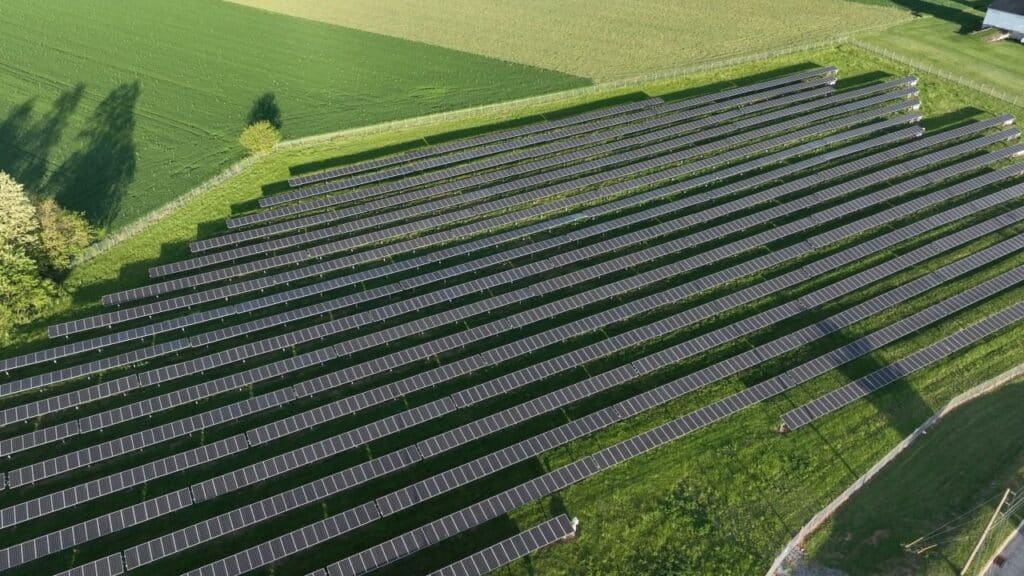
Solar technology is advancing rapidly as the industry moves toward fully modular designs.
For an industry facing an ongoing labor shortage and difficulty sourcing new workers, prefabrication and modularization are a godsend. Each step toward simplification, from pre-cast foundations and racking to bundled PV wire and substations, improves solar project efficiency.
Modular components not only speed up projects but help standardize processes and reduce risk. That’s especially important, since getting an installation wrong on a solar site could be an expensive — and dangerous — mistake.
The same is true for insulation piercing connectors, or IPCs. Traditional IPCs have been around for a while, but recent developments, including prefabrication, have improved their design. But what is an IPC, how do they work, and why should solar developers, EPCs, and utilities think about investing in them?
What is a Solar IPC?
IPCs are specialized connectors used to attach in-row PV wires to the trunk bus or feeder cable. The connectors attach to the main DC power line without requiring workers to strip, cut, or splice wires. Depending on the application and environment, different IPC options may be available.
When done correctly, IPCs create a tight grip at the piercing area, sending power from the panels straight to the main bus cable. IPCs are generally safe and reliable, and can protect connection points from UV, weather, moisture, chemicals, and other damage. However, they can also be time-consuming to install in the field, slowing down projects and opening the door for risk.
IPC Wins and Losses
However, field-made IPCs have limitations, including some that have hurt their reputation in the solar industry.
Solar sites face many challenges, including temperature changes, high humidity, dust, and other potential dangers. Though IPCs are often simple to install, workers may need specialized knowledge to do the job correctly. If they accidentally make mistakes in the field, it could lead to much larger problems down the road.
Loose connections caused by improper installations do more than reduce performance. If the IPC’s teeth don’t fully puncture the insulation to reach the conductor, power doesn’t move seamlessly from the panels to the bus.
Solving for Field Installations
IPCs themselves aren’t the issue for solar installations — it’s how on-site workers use them.
Bringing IPC installation into a controlled environment like a manufacturing facility stops potential issues at the source. To create a tight fit, workers first add a compression connection wrap to the PV wire conductor. Once the wrap is in place, they attach the IPC to the wire and use a high-compression crimp to force its teeth into the feeder cable.
To achieve a strong connection, the teeth must break through the conductor’s insulation in several locations. Once the IPC is attached, installation tools validate and geo-record each crimp, removing guesswork.
Why Pre-Fab IPCs Work
Prefabricated options reduce the risk of improper installations by allowing manufacturers to spot issues before the wire ships. Factory workers test each connection for a secure fit, and redo installations if parts fail inspection.
Moving the installation process to a controlled facility also helps reduce the solar developer’s project scope. For example, SunPull creates fully customized solutions with all in-row PV wires, feeder cables, and IPCs attached. After meeting with the developer, SunPull manufactures the entire trunk bus system and thoroughly tests each piece.
Additionally, because the manufacturer assumes the risk, all IPCs must meet several UL safety standards, including:
- UL 486A-486B for wire connectors
- UL 486D for sealed wire connectors
- UL 94 for flammability
- UL 6703 for PV system connectors
Once the trunk bus systems are ready, on-site crews only need to attach the wires to their respective locations. The system’s plug-and-play design lets crews work faster with less worry about lugging heavy crimping tools or struggling to create tight connections.
Pre-Fab Solutions for Complex Builds
Pre-fab IPC solutions also work well with complicated utility-scale solar site configurations. Solar sites are notorious for not fitting into perfect rows and square plots. For non-ideal site configurations, custom-designed and manufactured PV wire products are a perfect fit.
One critical advantage prefabricated IPC products have over other installation options is that they’re designed to treat each row as its own system.
Why does this matter for the standard solar developer, though?
- Consolidating outputs on each row allows IPCs to work like localized nodes, feeding power to trunk lines without splices.
- IPCs on each row make it easy for workers to isolate individual areas for testing, finding faults, and other maintenance.
- Workers can spot issues quickly and correct them by disconnecting a single IPC, rather than powering down several rows.
Beyond the clear benefits out in the field, prefabricated products don’t pass inspection if they don’t create pure connections. Field-made IPCs often require using a heavy crimping tool that doesn’t create consistent results. Pre-fab IPCs eliminate that problem at the source — workers only need to install a plastic casing to protect the system.
In the rare event a faulty IPC reaches the site, the system is flexible enough for on-site workers to reinstall IPCs quickly.
Pre-Fab IPCs
IPCs have come a long way in a short amount of time, but they aren’t the only connector type on the market.
Solar developers also have access to connectors that use an over-mold system to protect connection points. To use an over-mold connector, workers strip sections of PV wire to remove insulation, then install the connector. They then add a rubber over-mold with whips to complete the system.
However, one drawback of over-mold systems is that the area where the insulation is stripped away may undergo shrink-back over time. Shrink-back happens when installed systems go through repeated hot and cold cycles, stressing the rubber casing. Eventually, the rubber around the wire pulls back, exposing bare copper on the edge of the connections.
Sealing issues can result in several problems, including moisture and air damage, faults, and even fire risks.
Insulation Piercing Connections Bring Merit, Flexibility, and Reliability
The main goal for any solar developer or EPC is to reduce risk as much as possible.
By allowing manufacturers to be part of the planning and development process, developers can reduce project scope. Manufacturers, for their part, can design and produce complete trunk bus systems to seamlessly and safely connect panels to combiner boxes.
Prefabricated products have come a long way in a short amount of time. As more utility-scale solar projects pop up across the United States, developers must continue keeping costs down and speed up. By relying on cost-effective modular options, developers can get more work done with less labor. Pre-fab options also require less experience to handle than field-built components, leading to fewer mistakes.
With the right partners, EPCs can reduce their scope and focus on launching successful projects.
