Renewable Energy Shines Amid Unprecedented Growth

Stop me if you’ve heard this before, but the United States is using record amounts of electricity. 

If the news sounds like a broken record, it’s for a good reason. After 15 years of fairly stagnant electricity use, consumption has risen quickly in recent years. According to the U.S. Energy Information Administration (EIA), consumption has grown 2.1% annually for the last five years. 

But what factors are causing energy use to jump so quickly? Unfortunately, there isn’t a problem we can safely point a finger toward, but rather a combination of variables. For example, the United States is in the midst of a data center boom. Data centers consume an incredible amount of electricity to move data around, perform complex tasks, and cool servers. 

Simultaneously, more Americans are jumping on the electrification bandwagon, powering everything from cars to stoves with electricity. As more products shift away from traditional fossil fuels, they need power from somewhere. And finally, severe weather is shellacking the country more often, with stronger storms. 

These factors, combined with myriad others, have made electricity a hot commodity, and the markets have responded in kind. Electric rates are up, sending ratepayers reeling and leaving utilities scratching their heads for answers. 

But the ongoing energy issue has also opened the door for emerging energy sources to jump in. Amidst a perfect storm, solar energy, wind power, and battery storage are uniquely positioned to thrive. 

Mitigating Clean Energy’s Intermittency 

Renewable energy generation could reach new heights in 2026, thanks to critical improvements to battery storage. 

Previously, wind and solar were only as reliable as the sun and wind. If the sun was shining and the wind blew, panels worked and turbines spun. However, once the sun set and the wind died down, so too did the power production. Although battery energy storage systems (BESS) don’t fully solve clean energy’s intermittency issues, improved dispatching helps mitigate them. 

For the clean energy industry, battery storage is a cheat code. But it isn’t just developers who see the potential; the EIA thinks renewable power could make another leap in 2026. 

The EIA predicted that renewables will comprise roughly 93% of planned 2026 electric generating capacity. Even better, solar energy may be 51% of all planned capacity additions, with wind and battery storage combining for 42%. 

And, unsurprisingly, states with large solar footprints, like Texas, Arizona, and California, are leading the way. Not only are they at the vanguard of the green energy transition, but they’re also breaking renewable energy generation records

Solar’s Massive Swing 

Under the first year of President Donald Trump’s second term, the renewable energy industry found itself in the crosshairs. 

The Trump administration moved quickly, gutting tax incentives for solar and wind, and reversing policies supported by the Biden administration. Experts feared the moves, which ended some programs and early sunsetted others, would have a chilling effect on the industry. 

That hasn’t been the case so far. 

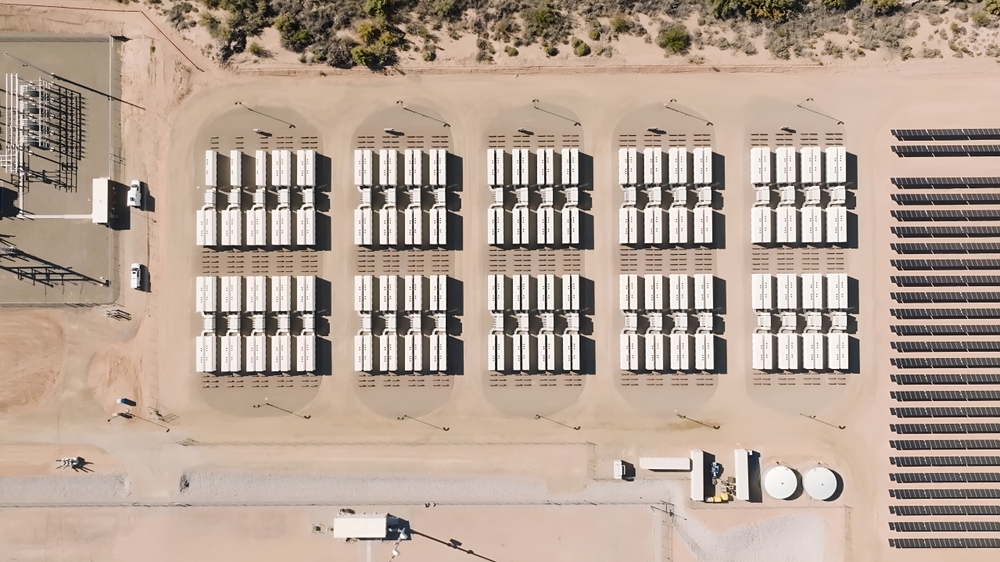
Top View of Battery Energy Storage Containers Beside a Solar Farm - Sun-Pull Wire (Photo via Shutterstock)

BESS Make Renewables Stable and Strong 

Even without federal support, solar and wind energy have kept the momentum going. 

Federal Energy Regulatory Commission (FERC) data shows solar added 26.5 GW of new grid capacity in 2025. Meanwhile, wind power added another 5.8 GW of installed capacity, while coal capacity fell slightly because of planned retirements. 

Overall, developers aren’t as phased by Trump’s rhetoric as initially thought. EIA data also supports this claim, estimating 43.4 GW in additional capacity this year. Battery storage may also expand, with 24.3 GW expected to come online in 2026. 

The renewable segment is benefitting from several bits of good news. Solar eBOS costs have stabilized after years of decline, though soft costs (permitting, labor, etc.) are more stubborn. Still, solar PV’s Levelized Cost of Energy (LCOE) is generally lower than natural gas, even without tax credits. Plus, projects billed as “solar + storage” deals are generally less expensive than natural gas or other fossil fuels. 

Renewable Energy Breaks Records in 2026 

Amid rising electricity demand and outrageous electricity bills for ratepayers, solar and wind projects have been pulling their weight. 

States that invested in solar, wind, and battery power are already reaping the rewards in 2026, thanks to the season. Springtime tends to be when renewable energy sources pick up steam. Strong winter winds still blow in March and even into April, while sunnier days amp up solar generation. 

Of course, more utility-scale solar projects also mean more opportunities to produce power. 2026 year-to-date totals through Q1 outpace 2025 and 2024, and it isn’t even close – production has nearly doubled from 22.1 GW in 2024 to 39.3 GW in 2026. 

States Set New Milestones 

Renewable energy is picking up nationwide, with several states and grid operators leading the way. Their investments in solar panels and wind turbines are paying off, helping meet crucial sustainability and grid reliability goals. 

Texas (ERCOT): 

The Electric Reliability Council of Texas (ERCOT) recently set personal bests for wind and solar energy production this spring. 

On March 14, ERCOT set a one-day record of 28,470 MW of wind power generated, breaking its previous record from March 2025. One week later, on March 21, ERCOT set a new solar energy generation record, producing 33,452 MW of electricity. Not only did it break the previous day’s record, it was one of three solar generation records in March. 

Texas is also resetting its battery discharge records, regularly outproducing its previous best. The news arrives at a perfect time for the state, as Texas has become a hotbed of activity. Not only is Texas a renewable energy leader, it might become the data center capital by 2030

California: 

In March 2026, clean energy met or exceeded electricity demand for a portion of the day on 30 of 31 days. 

Last year, clean energy achieved this goal on 279 out of 365 days. Each year, the number has grown as more renewable projects connect to the grid. 

Midcontinent Independent System Operator (MISO): 

This large region, which covers 15 states and Manitoba in Canada, has also broken clean energy records this year. On January 13, the regional transmission organization broke its previous wind production record, reaching 26,572 MW. The new mark beat its previous best set only a couple of weeks earlier in December 2025. 

More recently, on April 20, MISO broke its solar production record, setting a new high of 18,790 MW. The previous personal best was set during March. 

Unlocking Renewable Energy’s Potential 

Clean energy is on the rise across the United States, but that doesn’t mean it doesn’t have its difficulties. 

For solar, wind, and battery storage to maintain momentum, two things must happen: streamline both our processes and projects. In each case, slow processes and inefficient operations bog down potential renewable projects. The result is long delays, more expensive projects, and continued difficulties meeting rising demand. 

But where should we focus our energy? 

Less Red Tape 

The easiest way to streamline processes is to get all the required players on the same page. This means finding ways to align federal, state, and municipal guidelines when possible. 

Current projects can wait for years to connect to the grid. That means a project proposed today might not see the light of day for four to five years. For developers, those delays lead to lost revenue spent on land leases, labor, reviews, and more. 

Compounding the issue is that the soft costs of solar energy aren’t falling as the hard costs have. Hard costs, which include racking, panels, and PV wire, have dropped and stabilized over the years. Soft costs, though, like permits, inspections, interconnection, and labor, have been more difficult. Reducing those costs could make clean energy development much more attractive across the country. 

As the industry and government find common ground and establish guidelines, it ultimately saves time and money for everyone. Streamlining reviews and other processes can shave months off the permitting process for developers, reducing costs and delays. For governments, more unity leads to faster reviews, fewer redundant processes, and more opportunities to add grid capacity. 

Sun-Pull Solar Farm Install

Update the Grid 

The U.S. electrical grid contains components more than 50 years old, leading to unreliability. As the grid gets older, it also struggles to incorporate new generation capacity and electricity generation options. 

Improving the grid can go a long way toward addressing ongoing issues, but it’s an expensive task. However, those updates can increase overall reliability and open the door for queued solar and wind projects to interconnect. 

In the meantime, it’s possible to update and stabilize the grid in smaller, less expensive ways. One idea is to invest in microgrids and other distributed energy resources (DERs). These installations can reduce overall grid strain, encourage local energy production, and reduce overall electricity costs for ratepayers. 

A New Dawn 

Now is the clean energy industry’s time to shine. 

Solar and wind energy are completely renewable, domestic, and clean. Add in battery storage options, and clean energy becomes much more attractive to large-scale developers and utilities. 

With that said, something needs to replace coal power, which has been cut back somewhat. Renewables can pick up the slack, utilizing brownfields, former coal plants, and other undesirable areas to generate electricity. As a bonus, these sites also help communities right away by generating low-cost electrical power and creating jobs. 

Renewable energy is ready and able to do its part to support the power grid. Energy consumption is rising, and consumers want lower prices, cleaner energy, and more reliability. Clean energy does all these well, using infinitely renewable resources as its engines.

Solar Success: Illinois Passes Clean and Reliable Grid Affordability Act

In January, Illinois Governor J.B. Pritzker signed the Clean and Reliable Grid Affordability Act (CRGA) into law, sending waves through the solar industry. 

The CRGA builds on the state’s successful 2021 Climate and Equitable Jobs Act (CEJA), cementing Illinois’ commitment to renewable energy. But, perhaps most importantly, the upcoming law could make electricity more affordable for residents. At a time when energy consumption is rapidly increasing, affordable electricity is a critical issue. 

But what does the CRGA do for Illinoisans, and can other states use it as a blueprint for their own residents? 

What is the Illinois Clean and Reliable Grid Affordability Act (SB-25)? 

According to Gov. Pritzker, the law, which takes effect June 1, 2026, achieves several key renewable energy goals. 

While the focus is on driving clean energy development, the CRGA aims to align ratepayers, developers, and utilities. When combined, proponents of the law say it could create jobs, lower electricity rates, and stabilize grid performance. 

Specifically, the CRGA tackles a few high-level issues, including: 

Lower Utility Bills for Illinois Residents 

As part of the law, Illinois plans to add another 3 GW of battery storage to the state’s grid by 2030. Battery storage has given solar and wind energy a boost in many instances, making them more consistent power generators. 

Another method of reducing utility bills is by adding more power generators to the grid. In this case, the state is lifting a decades-long moratorium on nuclear energy development. Keep in mind, the moratorium isn’t ending for all nuclear installations, just those over 300 MW. 

The CRGA includes another layer designed to reduce consumer costs. State utility and energy regulators have more power, giving them oversight into overall resource planning and management. The hope here is to reduce grid volatility and slow down or reverse energy costs. 

Develop New and Emerging Energy Sources 

For decades, traditional fossil fuels like coal, oil, and natural gas have ruled the generation landscape. 

Today’s electricity generation mix, however, is more diverse, thanks to innovative clean energy technologies. Illinois’ CRGA continues to promote new energy sources, allowing the state to develop new long-term renewable energy partnerships. 

But partnerships don’t mean much if residents don’t save money on their electricity bills. To reduce costs and encourage development, the CRGA expands the maximum size of community solar projects from 5 MW to 10 MW. By doubling the size, lawmakers hope to create more opportunities for mid-scale solar projects while improving grid reliability. 

Of course, embracing new technology means striking while the iron is hot. Although Illinois wants to establish a long-term approach to clean energy development, federal funding may not be available. To that end, the state has reduced red tape, fast-tracking renewable energy projects to beat federal tax credit deadlines. 

The move makes sense, considering the current administration’s stance on clean energy. The CRGA essentially allows Illinois to “get while the getting is good” and receive money before federal sunsets arrive. 

Protecting Consumers 

One aspect of the CRGA that appeals to many people is the establishment of a Solar Bill of Rights

Essentially, the Bill of Rights solidifies several key protections for residents, including those investing in low-voltage solar projects. 

According to the CRGA, “Notwithstanding any provision of this Code or other provision of law, the adoption of any ordinance or resolution or the exercise of any power by a county that prohibits or has the effect of prohibiting the installation of a solar energy system or low-voltage solar-powered devices is expressly prohibited.” 

Long story short, HOAs, municipal governments, and counties can’t stop residents from taking advantage of solar energy. This is a win for consumers, as it opens the door for anyone to generate solar energy. For example, renters could one day invest in ultra-small-scale systems to reduce costs. 

The CRGA also creates and expands Virtual Power Plant programs in the state for people with battery storage systems. According to the law, residents enrolled in a VPP can receive a $250 rebate per kWh of storage capacity. 

Create and Update Integrated Resource Plans 

One of the most critical pieces of the CRGA is the creation and expansion of Illinois’ Integrated Resource Plan. 

The idea behind IRPs is simple — save ratepayers money, maintain grid reliability, limit energy shortfalls, and improve energy portfolios. When done well, integrated resource plans put operators and ratepayers on equal ground. In this case, the state’s electric utilities must work in good faith to maintain ratepayer costs while planning for the future. 

Utilities must submit initial IRPs to the Illinois Commerce Commission by November 15, 2026. Subsequent plans are due on September 30, 2029, then again four years later. 

Cautiously High Hopes 

The CRGA is ambitious, but Illinois Power Agency officials say the law could save ratepayers $13.4 billion over two decades. All told, net savings could sit around $12 billion. 

Skeptics, though, think the estimated savings could be on the high side. They contend that battery subsidies may trigger additional costs, forcing consumer rate hikes. The jury is still out, but battery costs have fallen dramatically in only a few short years. 

Meanwhile, state officials say the CRGA can limit energy waste and provide much-needed relief for low-income residents. The Citizens Utility Board (CUB) echoed the response, suggesting $1 invested in energy efficiency could return $2 or more. 

But how does the math work? The CUB believes investments in the grid and alternative energies today could help the state avoid expensive future grid upgrades. 

How Does SB-25 Impact Illinois and State Sovereignty? 

The truth is, energy bills are rising, especially for low-income residents. 

The CRGA aims to improve affordability by increasing and diversifying the amount of power produced in the state. As more power comes online, costs go down, boosting affordability. 

At the same time, new and emerging energy generation options help modernize an aging electrical grid. The introduction of more solar systems, virtual power plants, and microgrids reduces reliance on the larger grid. Similarly, smaller grids and backup systems reduce the impact and spread of outages when they occur. 

Equally as important as keeping rates low is preparing for the state’s energy future. Combining solar, wind, energy storage, and even nuclear power plants helps reduce the need for fossil fuels. In turn, better technology enhances our ability to produce and distribute power. 

States Control Their Fates 

Illinois is among a growing number of states expanding their investment in clean, renewable energies. 

For example, Texas has heavily invested in renewable energy, becoming a leading solar and wind energy producer. The bet has paid off handsomely so far, as they’ve recently set generation records for solar and wind. 

ERCOT, which controls Texas’ electrical grid, recently reported new generation records, thanks to high winter wind speeds and sunny spring days. In 2025, the state also saw a large number of renewable projects come online, boosting overall production. 

As federal support for renewable energy fades, states like Illinois are spearheading state-led initiatives. Time will tell what these programs may look like in 5-10 years, but for now, they’ve given developers and utilities renewed hope. 

Will Other States Follow Suit? 

The solar industry can’t trust federal funding, which has sent a chill throughout the country. 

We’ve already seen the initial results stemming from the abrupt funding reductions for renewable energy. Tax incentives are ending sooner than expected, and Inflation Reduction Act programs have lost funding. In the current environment, states are now choosing to enact their own clean energy agendas. 

Luckily, solar developers and EPCs can access state and local government programs and find funding. The DSIRE database is especially helpful, compiling state and municipal programs designed to make renewable energy more affordable. 

Community and utility-scale solar developers can also find hope in community solar programs. Currently, 19 states and the District of Columbia have community solar programs, which establish microgrids and help consumers access low-cost renewable energy. 

A Blueprint for Other States 

Although Illinois’ new law isn’t active yet, in the coming months, the CRGA will give more teeth to the state’s previous 2021 law. It will also join many other progressive programs across the United States. 

The majority of U.S. states have some sort of clean energy portfolio, but many Southeastern states haven’t signed on. If successful, Illinois’ process could one day serve as a guide for other states with clean energy goals. 

We’ll eventually see how utilities, ratepayers, and the state will adjust, but renewable energy seems safe for now.

NEC 2026: What Solar EPCs and Installers Should Know

Every three years, the National Fire Protection Association (NFPA) updates NFPA 70, AKA the National Electrical Code (NEC). 

True to its name, the NEC covers every facet of electrical safety, and each release brings new changes, additions, and clarifications. For the solar industry, Section 690 comprises the bulk of our guidelines, though other sections, including Section 705, also apply. 

When the NFPA released NEC 2026, there were fewer widespread changes for the solar industry than in previous rounds. This is welcome news for developers and operators, because as the industry matures, the rules governing it have become more stable across the solar landscape. 

For EPCs, developers, and operators, seeing so few tweaks to Section 690 is a boost after several rounds of wholesale changes. But what exactly has changed in the most recent NEC, and what do solar EPCS, installers, and operators need to know? 

Diving Into NEC Section 690 

Most of the minor changes made to Section 690 were meant to clarify or simplify rules for installers.  

Section 690.4 – General Requirements 

The largest change in this section simplifies calculations with fractions of volts or amperes. 

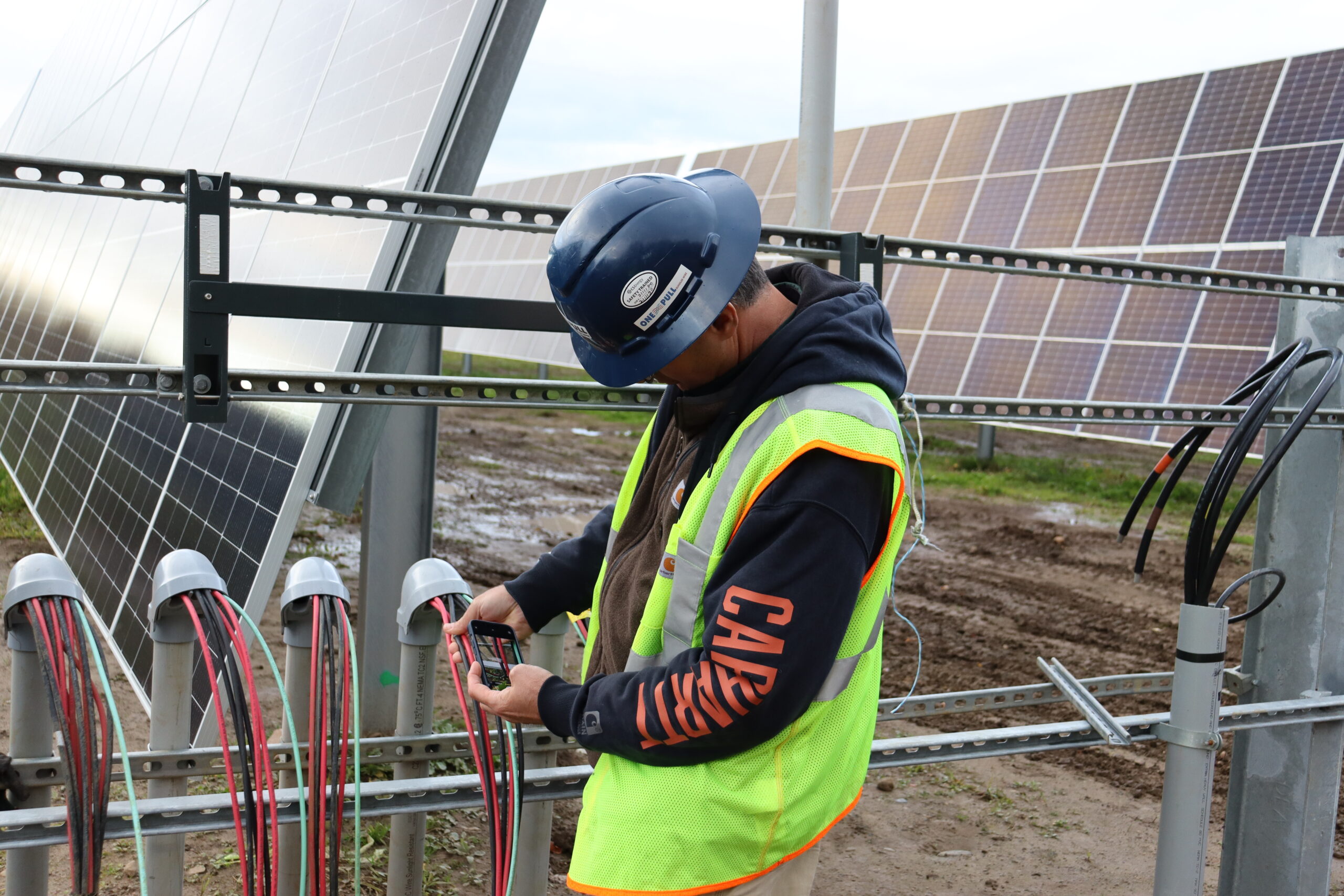
Installing PV Wire at a Solar Site - Sun-Pull Wire

Under the updated rules, workers can round their final calculations to the nearest whole number when less than .5 volts or amperes. A similar rule already applies to other NEC sections about branch circuits, and now also applies to PV installations. 

So, how does the new regulation work? Let’s say the final calculation for a given circuit’s current is 10.3A. Under the new NEC provisions, you could round the current down to 10A. 

The change has several applications for electrical workers. Voltage calculations help determine temperature limits, while current dictates temperature or conduit fill rules. 

Section 690.8 – Circuit Sizes and Current 

In Section 690.8, there are changes to maximum currents, mainly in reference to minimum wire sizes. 

Under the 2023 NEC, PV systems over 100kw could employ electrical engineers to help determine maximum currents. Once completed, those engineers would need to document and stamp any work they did. NEC 2026 offers similar language but removes the 100kw size reference. This means any size project can use calculations furnished by an electrical engineer. 

So, why does the project size and engineer documentation matter? Section 690.8 outlines the smallest conductors a project can safely use. By removing the 100kw barrier, it opens the doors for smaller projects to find cost savings on their sites. 

Keep in mind that minimum wire size calculations may not change much for smaller projects. There is definitely value, however, for large-scale projects using miles of large-gauge copper wire. 

More in Section 690.8 

Section 690.8(A)(2) covers terminating circuits to Electronic Power Converter (EPC) Inputs. 

EPCs are generally inverters in a PV system. When workers size conductors for termination at the input of an inverter or another electronic, there’s math to do. Typically, we take our PV values and multiply them by 125%, then again by 125%. In total, we’re multiplying values by 156% to determine conductor size for the current they’re carrying. 

Changes in this section allow workers to use conductors that more closely match the currents they’ll likely carry. It also aligns more closely to how electricians in other fields handle current sources, including overcurrent protection devices (OCPDs). 

Under NEC 2026, the update rule streamlines the process. Now, the maximum current can match the EPC’s rated input current if it meets one of several criteria, including: 

  • If an OCPD not exceeding the conductor’s ampacity protects the terminating circuit to the EPC 
  • If the circuit’s maximum current complies with Section 690.9(A)(1) 
  • If the circuit is 690.9(A)(3) compliant 

The good news here is the new 690.8(A)(2) rule may reduce the conductor size needed for an inverter or combiner box setup. In that case, projects could see lower overall PV wire costs. 

Section 690.13 – PV System Disconnecting Means 

The update to Section 690.13 now requires disconnecting means to be in line with Section 705.20. 

Per Section 705.20: If the power source service disconnecting means meets the requirements of both 705.11 and 705.20(A) through 705.20(F), a separate source disconnecting means is not required. 

According to Section 705.20, installers can use breakers to cut the power to a solar system, rather than knife switches. Knife switches are an expensive add-on, so utilizing another available common cut-off method reduces overall installation costs. 

The changes simplify the rule, allowing a single disconnecting means to disconnect multiple power sources, including the PV system. Doing this reduces the need for an expensive shutoff system specifically for PV panels. 

Cost is important, but the bigger win is that solar energy sources are finally on par with other power sources like generators and batteries. 

Section 690.31 – Wiring Methods 

Traditionally, PV DC circuits couldn’t share a housing with non-PV circuits. That has changed slightly in the NEC 2026 guidelines. 

In some cases, PV and non-PV circuits can share a raceway, but only if there’s a partition to separate them. The goal is to keep everything operating safely, so the partition keeps wires where they belong. However, one rule of thumb is to ensure the voltage is the same across both wire types. 

According to Section 690.31, the code states: The other circuit conductors are part of a multiconductor jacketed cable with a jacket insulation rating equal to at least the maximum circuit voltage applied to any conductor installed within the same wiring method, and are used for remote control, signaling, or a Class 1 power-limited circuit associated with the PV system or energy management system.  

Long story short, make sure to have the right protections in place if you plan to house PV and non-PV wires or cables in the same raceway. 

More on Section 690.31 

The next point of clarification impacts how wire is used in different applications. 

NEC rules now state that PV wire is okay to use in any area you’d normally use RHW-2. In a solar energy system, RHW-2 can be a “hot wire,” carrying electricity from solar panels to inverters. 

Additionally, we now have permission to use distributed generation (DG) cable where codes already allow tray cable (Type TC). However, to comply with Section 690.31(C)(1), conductors must follow a couple of rules, including: 

  • Support or secure exposed conductors using cable ties, straps, hangers, or another approved fitting 
  • If installed outdoors, use materials listed for outdoor applications 

Workers must also support the wire every two feet, though they can secure wires larger than #8 AWG every 4.5 feet. 

Section 705.11 

Lastly, changes to Section 705.11 impact solar developers, but it’s more of a revert, if anything. 

In NEC 2020, we saw language explicitly referencing conductor length limitations when interconnecting PV systems to service panels — in other words, connecting the solar system to the larger utility system via a service panel. However, the 2023 NEC rules changed the language in Section 705.11, dropping the length limitation. 

Fast forward to today, and NEC 2026 has brought back the length limitation language from 2020. Now, total conductor lengths must be less than 10 feet when used in residential dwellings. Other applications allow for conductors up to 16.5 feet from the service panel to the PV system disconnect. 

With that said, there are situations where conductors may be longer than 16.5 feet, but require cable limiters. These limiters provide additional short-circuit and fault protection for the entire system. 

Keeping an Eye on 2029 

There is no better time to worry about the future than today. 

Now that the 2026 NEC is live, our attention shifts to 2029, when the NFPA plans to restructure the NEC. If you haven’t heard about the changes yet, you can find them listed in Annex L of the 2026 NEC.   

According to the organization, restructuring does several things. First, it allows the NEC to better adapt to and support new and emerging technology. Under the current code, new technology doesn’t always neatly fit. Reorganizing the codes makes it easier for the NFPA to make changes and improves usefulness for electricians. 

Some experts also believe a potential reorganization could align the NEC more closely with the International Electrotechnical Commission (IEC). IEC standards are used globally, serving as the national standard for many countries. And while both the NEC and IEC cover installation, use, and maintenance, potential shifts won’t align the two completely. 

At the very least, rejiggering the NEC will make the system more efficient. Of course, that efficiency will also make the codebook look a lot different. For example, the current 2026 NEC has nine chapters, but the 2029 NEC will have 23. Though it’s a drastic visual shift, the goal is to make life simpler for those who use the codebook the most. 
 
Despite visual changes, the solar power industry shouldn’t expect many changes in 2029. Solar energy is a maturing technology, and we can look forward to small changes and fine-tuning. But, as we’ve learned in our industry, change is the only constant we can rely on.

Where Do ITC and PTC Solar Credits Stand in 2026?

When President Donald Trump signed the One Big Beautiful Bill Act (OBBBA) last July, sweeping changes blasted the renewable energy industry. 

For an industry seemingly finding its stride, the OBBBA was a baseball bat to the knees. Nearly every sector was impacted, including solar, and developers, manufacturers, and consumers alike suffered. 

And while it’s true that misery enjoys company, the changes leave developers and consumers scratching their heads. Unfortunately, the solar industry must now find ways to expand with less federal help. 

Tax Credits Fading Out 

At a time when AI growth is causing electricity use to soar, the solar industry lost part of its appeal. 

The OBBBA brought drastic changes to tax credits and incentives for investing in solar projects. Most notably, it shortened the sunset dates for critical ITC and PTC credits originally extended by the Biden administration. 

But where does the industry stand in 2026, and what can we do to preserve years of positive momentum? 

Residential Solar 

If any part of the solar industry took the brunt of the changes, it was the residential solar sector. 

Under the Inflation Reduction Act, homeowners were eligible for a 30% federal tax credit applied to the cost of their solar installations and battery storage projects. However, to receive the credit for a battery project, applicants had to meet several requirements, including: 

  • 3 kWh installed with a new or existing solar project 
  • Exclusive solar charging for the first year 

Most notably, the Residential Clean Energy Credit (Section 25D) ended in December 2025.  

Once the OBBBA took effect, homeowners scrambled to get solar projects installed and operating by the December 31 deadline. Those who beat the buzzer and got their projects finished weren’t fully in the clear, however. To fully qualify, homeowners had to own the system AND have an income tax liability for the tax year. 

How Did the Industry React? 

Homeowners were left scrambling when news broke that the residential ITC cliff was approaching in a matter of months. 

With a short deadline, homeowners rushed to get solar projects online to take advantage of the ITC. Projects that missed the deadline weren’t as lucky, missing out on the 30% federal tax credit. 

Despite losing a massive residential solar incentive, there is still another way to qualify for savings. If they choose to, residents can invest in solar through commercial companies. In this scenario, businesses can claim a 48E tax credit through leases and power purchase agreements. 

The 48E tax credit does two things that help residential solar development. First, companies get to take advantage of federal tax incentives to encourage development. Secondly, businesses receiving the credits can pass along those savings to residents as lower-cost power. 

Where Does Residential Solar Stand Today? 

Without federal tax benefits, today’s homeowners are in a worse position than they were a few short months ago. 

Luckily, residents have a few other cost-saving avenues to make going solar more affordable. A growing number of states are stepping up to the plate, instituting trust funds, assistance programs, and other incentives.  

For those interested in going solar, the N.C. Clean Energy Technology Center’s DSIRE database outlines available state and municipal solar incentive programs. 

Commercial and Utility-Scale Solar 

Commercial and utility-scale solar didn’t suffer as much as residential, but developers are still licking their wounds. 

The problem here isn’t the elimination of crucial tax credits, but rather the timing of them. Under the Inflation Reduction Act, ITC and PTC credits were in place at current levels until 2032. Afterwards, there was a gradual multi-year sunset period. 

This is no longer the case with the OBBBA. Under the new law, Section 48E ITCs now face a cliff at the end of 2027. The timeline is drastically shorter, forcing companies to move projects along much more quickly and with fewer protections. 

For a wind or solar energy project to qualify for a 48E or 45Y credit, construction must begin by July 4, 2026. But the July 4 cutoff is more than a convenient deadline. Starting before then allows developers to qualify for a four-year safe harbor, giving them more time for the job. 

But missing the start date cutoff has dire consequences. Any projects started after July 4, 2026, must be fully operational by December 31, 2027. For large-scale utility projects, the timeline might be nearly impossible. Smaller community installations, however, could meet the December 2027 deadline with an efficient process. 

Are Safe Harbors Still Safe? 

Although developers and EPCs still have access to safe harbor coverage, they still pose issues. 

For example, the IRS recently changed the “Five Percent Safe Harbor” rule following Trump’s Executive Order 14315. Also known as “Ending Market Distorting Subsidies for Unreliable, Foreign-Controlled Energy Sources,” the E.O. says, in part: 

“This includes issuing new and revised guidance as the Secretary of the Treasury deems appropriate and consistent with applicable law to ensure that policies concerning the “beginning of construction” are not circumvented, including by preventing the artificial acceleration or manipulation of eligibility and by restricting the use of broad safe harbors unless a substantial portion of a subject facility has been built.” 

So, what does this jargon mean, and what does the government now consider “appropriate and consistent?” 

In short, solar developers must use physical work tests exclusively to prove work of a “significant nature.” Thankfully, the thresholds apply to both on-site and off-site processes, including manufacturing parts and system installation. However, preliminary work like planning, research, financing, testing, permitting, and clearing land is NOT included. 

Although the IRS changed the rules, low-output solar facilities (less than 1.5 MW) still fall under the Five Percent Safe Harbor rules. 

Batteries Avoid the Brunt of Rule Changes 

In a surprising twist, battery storage is largely safe from new rules instituted by the OBBBA. 

Battery storage projects keep their tax credits through 2033, but installations must comply with Foreign Entities of Concern rules. The rub here is that many of the companies and businesses in the battery storage supply chain fall within FEOC. 

China is one of several countries deemed a “covered nation” in the FEOC, which also includes North Korea, Russia, and Iran. Though every case is different, companies involved with these four countries typically don’t comply with the rules. The result is an industry forced to find alternative solutions to meet domestic and friendly-nation production. 

Domestic battery manufacturing is still a nascent industry in the U.S., so short-term availability and sourcing may struggle. The good news is that as near-shore and onshore production picks up steam, we could see long-term availability. 

New Year, New Taxes 

Finally, 2026 also brings a few other new tax surprises, including Prohibited Foreign Entity (PFE) rules. 

Introduced in the OBBBA, the PFE rules impact the 48E ITC, 45Y PTC, and 45X manufacturing tax credits, among others. Basically, the rules prevent Specified Foreign Entities (SFE) and Foreign-Influenced Entities (FIE) from claiming tax credits. Similar to the FEOC rules, SFEs include China, Russia, North Korea, and Iran. 

Businesses should also be careful around the new Applicable Payment Rule, which states that if an SFE is paid in a way that benefits them and grants control over a facility, the taxpayer can’t claim credits. The reason this rule is important is that it’s effective within the first 10 years of a site entering service. 

Operators must be aware of every company they work with, because one mistake could lead to trouble. For example, if an operator makes site maintenance payments to an SFE-associated company, the IRS can potentially claw back 100% of the claimed ITC

Finally, there are new Material Assistance Cost Ratio Rules, which restrict the percentage of products sourced from PFEs for projects. Though similar to the domestic content rules we’re already familiar with, there is a key difference between the two. Unlike domestic content thresholds, Material Assistance rules cap total PFE components at 40%; otherwise, companies lose the credit. 

Additionally, the percentage of non-PFE content increases annually, making the benchmark harder to reach. 

Solar’s Fight Continues 

The One Big Beautiful Bill Act was a shot across the bow for solar and wind companies. However, it also generated opportunities for the industry to find creative solutions to complex energy production problems. 

Though residential solar lost its investment tax credits, homeowners can still participate in solar energy through PPAs and leases. They also have access to many state and local incentives, provided they know where to find them. 

At the same time, utility-scale and community solar companies have until December 2027 to complete their projects. Without a safety net, the best option most projects have now is to break ground before July 4, 2026. That would allow them to activate safe harbor rules and buy additional time. Similarly, battery storage may become more popular as it maintains its tax incentives, albeit with a few more strings attached. 

The point is, even though solar took a hit from the federal government, the future remains strong for renewables. Electricity generation and demand are issues in the U.S., and the grid is inflexible and unreliable. Meanwhile, tech companies have employed solar solutions to power massive data centers. 

At this point, the solar industry is entrenched in the United States. Despite headwinds, more doors will open for solar companies, either at the state or even local level. It’s just a matter of time.

The Perks of Owner-Furnished, Contractor-Installed Processes

In business, time is money; the same rule applies to solar development. 

Solar projects are massive investments, so finding innovative and simple ways to save money and improve profits is key. One method gaining momentum in the solar industry is “Owner-Furnished, Contractor-Installed” processes designed to save time and money. 

While it seems like a simple concept, OCFI relies on pinpoint accuracy and careful planning. But when it works, solar companies reap the rewards, and projects move much more quickly. 

So, what does “Owner-Furnished, Contractor-Installed” mean and how does it work? More importantly, who benefits from it and why should solar companies evaluate OFCI as a cost-saving solution? 

What Is Owner-Furnished, Contractor-Installed (OCFI)? 

OFCI programs aim to consolidate material sourcing with the solar EPC or developer rather than the subcontractor. 

Previously, subcontractors would source project materials, then mark up the cost when invoicing the EPC or developer. This process, known as Contractor-Furnished, Contractor-Installed (CFCI), allowed the subcontractor to use familiar components and increase margins. While the system worked for the subcontractor, the EPC paid more but had less visibility. 

By moving material sourcing to the EPC or developer, projects are inherently less expensive. And while subcontractors may lose some profit margin on materials, they benefit in other ways. 

OCFI Accomplishes Several Things 

For cost-conscious developers, the need for OCFI goes beyond saving a few dollars. 

OCFI streamlines and standardizes the sourcing process, making it easier to replicate and scale. When done well, it’s easier for companies to track projects, keep them moving, and shorten timelines. 

Reduced Overall Costs for Developers 

In the past, the developer paid marked-up prices for materials sourced by the subcontractor. 

OCFI takes sourcing out of the subcontractor’s hands and shifts it to the developer, eliminating upcharges and reducing overall costs. However, the lower cost comes with the caveat of more work. 

Developers must create and maintain relationships with distributors and manufacturers to ensure a steady supply of materials. They also need to coordinate with installers to make sure materials go to the right place at the right time. Under the CFCI model, the installer handles material delivery. Without that in place, the installer becomes dependent on the developer to keep the details in line. 

More Control = Consistency 

Every utility-scale solar project is unique, but there’s still room for standardization across job sites. 

In many cases, solar developers are working on multiple sites simultaneously. If each site uses different materials sourced by subcontractors, it can be hard to keep track of everything. OCFI solar processes give the EPC more control over the materials sites receive, simplifying sourcing across every project. 

By using the same components, EPCs can accomplish several goals. First, it reduces surprises because crews know what parts will arrive. Second, workers build confidence and comfort with specific components, helping them work faster. 

Finally, standardizing product selections makes ordering much simpler. The developer can verify stock counts and order materials as needed rather than chase suppliers for unique parts. 

Subcontractors Become More Effective 

OCFI systems can also positively impact subcontractors. 

When the EPC or developer orders pre-fabricated materials, installers spend less time in the field assembling them. Pre-fabricated solar photovoltaic (PV) wire, for example, may arrive at the worksite already bundled and with connectors attached. For workers, all they need to do is connect each wire to a solar panel and move on. 

But what about the subcontractor’s lost margin on sourced materials? In many situations, the subcontractor can easily replace the loss through speed. If the developer orders pre-fab materials, the team can move much faster in the field. This means less time assembling connectors, pulling single wires down long aisles, and performing other tedious chores. 

Additionally, using the same materials across multiple sites also creates familiarity and confidence. The result is a faster installation with fewer mistakes and delays. 

Over time, OFCI systems could lead to more projects completed annually. 

Developers Juggle Logistics 

One thing to remember about Owner-Furnished, Contractor-Installed projects is that the developer now handles logistics. 

Keeping track of materials, timelines, and work crews can be daunting. However, successful project management often comes down to answering several questions. 

How will the developer or owner coordinate deliveries? Companies need to know when materials will arrive on site and who will deliver them. 

Product delivery is a balancing act, and mistakes can create a slew of problems. Delivering materials too early to the worksite can create confusion and potentially lead to product damage as it sits. Of course, delivery delays or product shortages bring projects to a halt. When this happens, everything slows down, putting timelines and other slated projects at risk. 

Who will hold onto solar project warehousing stock? Developers often work on multiple utility or community solar projects concurrently. Those installations often use tens of thousands of feet of wire, hundreds of racks, panels, and other parts. 

Companies may operate using a “Just in Time” approach to save space and costs, but sometimes it isn’t possible. If EPCs choose to warehouse materials, they must avoid overstocking and paying for additional space. 

At the same time, companies should maintain adequate stock to address needs as they arise. 

Can the EPC or developer control the supply chain? More control, more responsibility. Included in that stress is the chore of evaluating and choosing manufacturing partners and vendors. 

Once the company finds suitable partners and vendors, the focus shifts to establishing transport, product tracking, and delivery methods. And if materials come in from overseas, shipping routes, tariffs, and other variables come into play. 

Beyond delivering components from Point A to B, companies must also contend with the risk of damaged goods, late arrivals, and other problems. When issues arise, the company is responsible for getting the job back on track as quickly as possible. 

Risk Meets Reward 

The United States’ clean energy boom has brought solar installations to the forefront. It has also changed how solar companies create, manage, and improve their bottom lines. 

If done correctly and conscientiously, solar companies and contractors can both benefit. But the key to making OFCI activities work for everyone involves building and maintaining strong relationships. Developers need to have faith and a good rapport with their vendors, manufacturers, and logistics teams. Meanwhile, contractors must find developers with strong industry records and work closely with them. 

When EPCs consolidate processes, they also take on additional risk. However, the moves could lead to shorter project timelines, streamlined operations, lower costs, and more long-term savings.

BESS Buy: Solar Excels with Battery Energy Storage Systems

What do the solar industry and the Greek story of Achilles have in common? 

It seems like a stretch, but the renewable energy darling and powerful Greek warrior have plenty of similarities. 

Over the past decade, solar energy has emerged as a low-cost electricity producer. It consistently leads other energy generation methods, including wind and natural gas, in quarterly capacity additions, and accounted for 61% of new capacity in 2024. 

And, to be fair, solar checks off almost every box you’d want in an energy producer: 

Like Achilles, solar energy seems like an unstoppable juggernaut. But, like our Greek hero, it also suffers from a potentially fatal flaw: consistency. 

Consistently Inconsistent 

Unlike traditional fossil fuels, which produce energy as long as fuel is available, solar panels need sunlight to work. As a result, it’s currently difficult for the U.S. to fully embrace solar solutions. 

However, rapidly evolving battery technology may finally address the issue. 

Battery energy storage systems, or BESS, allow us to store energy for when we need it most. Not only do BESS make solar and wind energy more consistent, but they also address lingering grid reliability issues. 

But what is BESS, how do they work, and how can these systems create cost savings for solar developers, utilities, and end users? 

What is a Battery Energy Storage System? 

Think of a battery energy storage system (BESS) as a gigantic rechargeable battery. 

When solar panels or wind turbines generate electricity, it flows into the massive batteries. Once collected, the batteries store the energy until needed. Generally, BESS systems help with balancing generated energy alongside the larger electrical grid. 

Like the rechargeable AA batteries powering our TV remotes, BESS systems operate using the same technology. Depending on the need and application, customers have several options for BESS installations, including: 

Lithium-ion: The most common BESS system battery used in the field. Developers like these systems because of low upfront and maintenance costs, long lifespan, and low thermal runaway risk. We can find lithium-ion batteries in plenty of everyday products, including laptops, smartphones, and electric vehicles. 

Lead-Acid: This battery type is common in vehicles, lawn mowers, and heavy machinery. It also has applications in telecom equipment, uninterruptible power supplies, and renewable energy projects. 

Flow Batteries: Flow batteries store generated power in two liquid electrolyte solutions, one positive and one negative. The amount of energy held depends on the size of the tanks used for the liquids. When we generate power, electrons move from the positive solution to the negative one. The process reverses when the battery discharges. 

Despite their composition differences, all three systems have high round-trip efficiencies. This means operators can pull a high percentage of stored energy from the battery if needed. 

And, just like our batteries at home, BESS have lifespans, eventually leading to recycling and replacement. The standard utility-scale BESS system can last more than a decade, but components like transformers can last much longer. Researchers at Argonne National Laboratory suggest BESS systems could last up to 35 years by replacing battery components when needed. 

Thanks to constantly improving technology, new chemistries, and storage methods, battery costs are declining rapidly and more accessible than ever. 

’til the Grid’s Power Runneth Over 

On an average sunny day, panels soak up the sun as it moves through the sky, sending tons of power to the grid. 

However, once the sun goes down, those once-powerful solar systems lose their fuel source and idle until the next day. Wind systems aren’t beholden to the sun but face similar shortcomings if the wind isn’t blowing constantly. 

For states and countries pushing carbon-neutral goals, renewables struggle to compete with 24/7 providers like natural gas. BESS, for its part, helps level the playing field a bit. 

Let’s say a community-scale solar site generates excess power during the day, but nothing at night. The problem is that end users don’t stop needing electrical power—quite the opposite, as early evening hours generally lead to peaking. 

Reaching the Peak 

Peaking occurs during dayparts when energy demand is the highest. We also see seasonal peaking during the summer, when people blast their AC units, and during the winter, when the heat is on. 

When peaking occurs, fossil fuel-powered plants kick on quickly to meet demand. Once the pressure eases, the plants reduce their output. 

Now, let’s introduce BESS into our energy peaking example. Customers still need power, but because the sun has been shining all day, the solar panels overproduced. As the sun sets and the solar panels’ production fades, the BESS system kicks in to slowly discharge. Power from the batteries enters the grid and makes its way to homes and businesses. 

BESS offers communities and operators a clean, cheap, and less polluting electrical option. They can also discharge their power quickly, often faster than ramping up a peaking facility. 

BESS Improves Solar Performance 

Adding a fleet of giant batteries to our country’s energy mix may not seem exciting. However, BESS does much more than provide power. 

Better Energy Utilization and Diversity 

Adding BESS to the energy mix propels solar energy forward and reduces the threat of intermittent performance. 

Solar panels produce an incredible amount of electrical energy, but struggle to harness the extra power. With a BESS in place, utilities and other operators can plan and budget their energy, adjusting discharges to maintain stability. 

Handling Electrical Arbitrage 

Arbitrage involves storing or buying electricity when the price is low and selling or discharging it when prices increase. 

During the average day, solar panels make power when the sun is shining. Typically, electricity costs and demand are lower during the day, allowing BESS to store low-cost excess solar energy. When the sun goes down and demand increases, so do prices–that’s when BESS unleashes its stored power to the grid. 

But arbitrage isn’t simply about taking advantage of low-cost power – it’s a lesson in power conservation. When battery systems store energy, they also reduce solar energy waste. This is because we can harness power without losing it, boosting efficiency. 

They also help address potential duck curve issues, which show the difference between peak demand times and solar energy production. When you overlay the two charts on a graph, the resulting data looks kind of like a duck. 

Peaks, Valleys, and Everything in Between 

Utility-scale solar projects paired with BESS help generate a steady power supply that meets electricity demand. 

It doesn’t sound like much, but when renewable energy can accommodate more daily energy demand, prices may drop. This is because customers pay more for power during high-use times. If the power itself costs less to produce, those savings may eventually reach end users’ electricity bills. 

Similarly, utilities rely less on higher-cost energy generated by fossil fuel peaking plants, reducing power costs overall. 

BESS = Back Up 

Besides being a repository for stored renewable energy, BESS plays an interesting role as part of the larger grid. 

Thanks to their rapid response times, BESS can immediately release power to homes and businesses during outages or emergencies. The action takes milliseconds and is much faster than the time and energy it takes to power up a facility. 

Battery storage can also reduce overall dependence and help stabilize our aging electrical grid. When severe weather poses a threat, BESS can act as a type of microgrid, powering nearby homes and businesses. Though the batteries may only have a few hours of energy stored up, it gives crews time to repair lines and restore power. 

For situations where there are rapid and sudden rises in demand, BESS can save the day. Rather than relying on long-distance peaking facilities, utilities can quickly discharge the battery’s energy to smooth out fluctuations. 

Rapidly Changing Energy Scene is Ripe for Opportunity 

Like any new technology, BESS will become more efficient and effective as time passes. 

The benefit these systems provide to renewable energy sources like solar and wind is undeniable. Battery storage not only corrects the largest issue associated with renewable energy but also allows low-cost energy to thrive. 

For the solar industry, solar + storage is the next step toward increasing the United States’ energy diversity. At the same time, systems are rapidly improving, becoming less expensive, and offering developers more options. 

Solar power systems are on the edge of a massive clean energy breakthrough. Despite industry headwinds, BESS can take utility and community solar power generation to the next level.

Stronger Bottom Lines: Reducing Utility-Scale Solar Installation Costs 

If we could sum up the solar industry in 2025, it might sound like the French electronic duo Daft Punk

“Work it harder, make it better, do it faster, makes us stronger.” 

As the solar industry adjusts to a rapidly changing political and economic environment, protecting the bottom line is crucial. Solar developers and EPCs are looking for every advantage possible to keep costs down, including: 

  • Performing installations faster 
  • Finding stronger, more reliable solar panels 
  • Investing in cost-effective racking systems 
  • Using pre-fabricated modules and factory-made PV wire 
  • Implementing automated systems to control labor expenses 


With the right combination of cost-cutting measures, utility-scale solar developers can reduce costs, maximize labor, and improve project longevity and reliability. 

Automation Enhancements 

No matter how you might personally feel about AI, robots might not be a bad thing, especially for an industry dealing with labor shortages. When used effectively, automation technology augments workers’ skills, making installations faster and, ultimately, less expensive. 

But how exactly do automated systems accomplish that goal? 

It all comes down to minimizing the impact of repetitive tasks for workers. Companies like Charge Robotics are taking the lead, creating fully autonomous bots like its Sunrise construction system. The robot quickly assembles and installs solar bays on-site while also performing quality control checks. 

For solar developers, the extra set of metal hands goes a long way. Robotic systems reduce jobsite risk and improve overall quality and speed with fewer workers. But Charge Robotics isn’t the only name in the game–it’s one of several start-ups planning to change the solar industry overnight. 

AES’s Maximo installs solar panels onto trackers using artificial intelligence (AI). The robotic system is technology agnostic and easily adapts to work with a variety of clamps, trackers, and panels. 

Beyond being an installation bot, Maximo takes on other incredibly important tasks on the project site. As it works, the system collects data, keeping solar developers informed about site progress and potential concerns. 

It also handles dangerous tasks formerly carried out by crew members. Instead of having a worker install panels onto trackers high above the ground, Maximo does it. Workers safely guide the robot from the ground, allowing it to work without putting crews at risk of falling. 

AES’s invention is already making waves, earning support from Amazon. The online retailer has used Maximo for several solar + storage sites that the company has invested in. 

The Need for Speed (and Safety) 

Regardless of the system, the goal is always the same: speed, safety, and simplicity. 

Robots move faster than people, can lift heavy panels by themselves, and place them with pinpoint precision. They also have a keen eye, powered by machine learning, to constantly perform quality control throughout the project. 

But, despite their skills and strength, robots and automated systems aren’t here to displace their human counterparts. If anything, they augment our strengths and help us do more with fewer resources. 

Robots don’t complain about performing repetitive tasks and can do those jobs faster than a crew of people. In the meantime, workers can focus on big-picture problems to keep projects moving smoothly and fix issues. Machines also alleviate hiring problems that solar developers face, especially in harsh desert environments where it’s tougher to attract quality talent. 

Piecing Together Projects 

Despite slightly higher upfront costs, factory-made components and modular systems can drastically reduce labor costs and installation times. 

The solar industry is facing incredible challenges, forcing EPCs and developers to find creative solutions to do more with less. For companies with tight deadlines, higher initial costs are worth potential long-term savings. 

Today’s solar projects are easy to assemble on site, coming together like giant building blocks. From start to finish, pre-built, factory-made parts simplify production and turbocharge development. 

Foundations 

Foundations are crucial to any solar project. These systems hold racking steady and protect installations from shifting and corrosion caused by severe weather and the environment. 

Depending on the site’s location, solar builders have a wide range of concrete ballast options. Manufacturers create the foundations off-site, then truck them in, saving crews precious time. 

But why should crews consider a factory-made concrete ballast when they can simply pour foundations? When workers pour concrete out in the field, they run the risk of weather, debris, and even the site itself causing issues. If the concrete doesn’t cure correctly, it won’t be as strong, reducing long-term reliability. 

By purchasing pre-made concrete ballasts, weather isn’t a factor since crews don’t need to wait for curing. The result is a plug-and-play building component ready for decades of operation. 

Racking and Frames 

Solar panel racking supports the panels themselves and, in some cases, tracks the sun as it moves through the sky. They attach directly to the foundation and serve as a skeleton holding everything together. 

To hasten construction projects, developers can order pre-drilled racking systems with the hardware already attached. Other times, the racks and frames may also include pre-installed DC wiring. With most of the work already done, crews only need to attach the panels and tighten the bolts. 

Wiring and Connectors 

If racking is the skeleton, then PV wire and connectors are the blood vessels and nerves. They transport solar energy collected by the panels and carry it to the combiner box as DC electricity. 

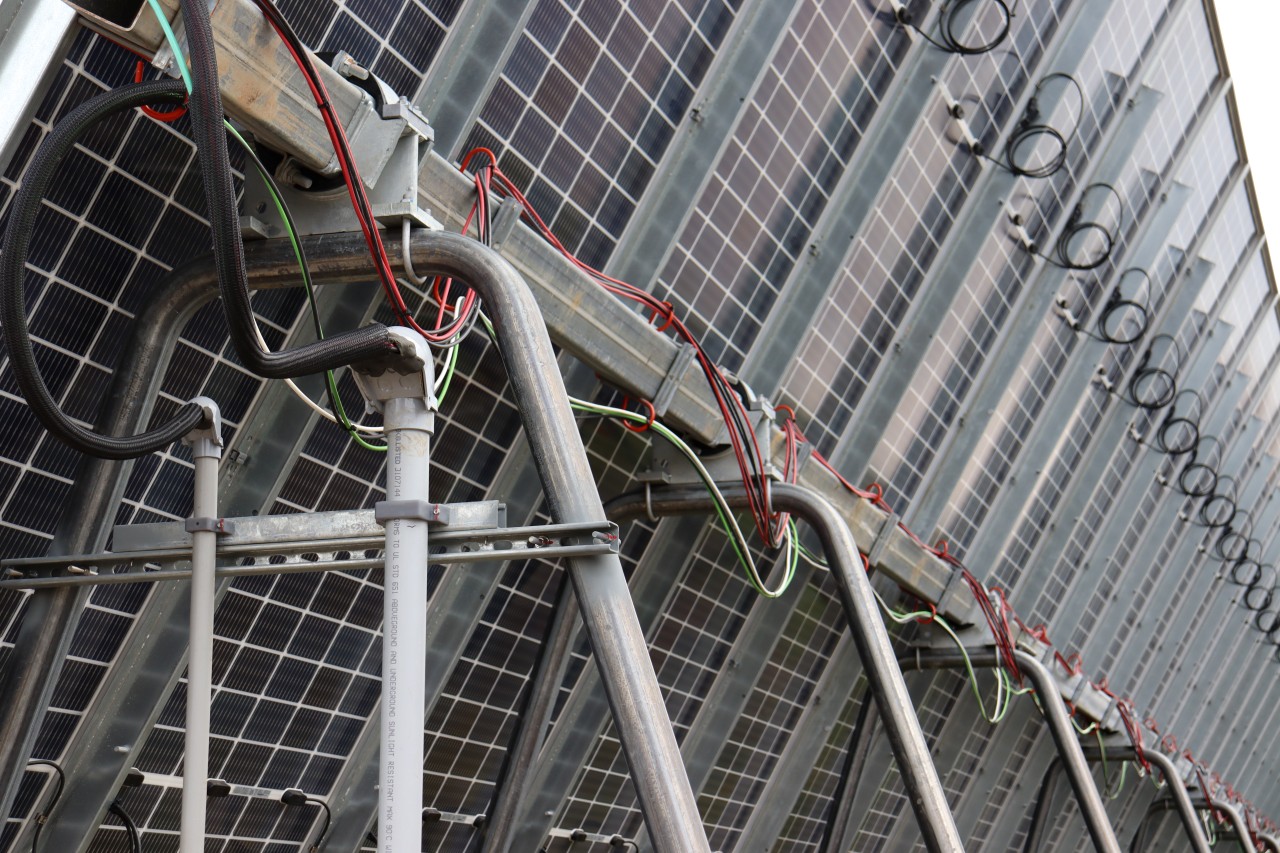
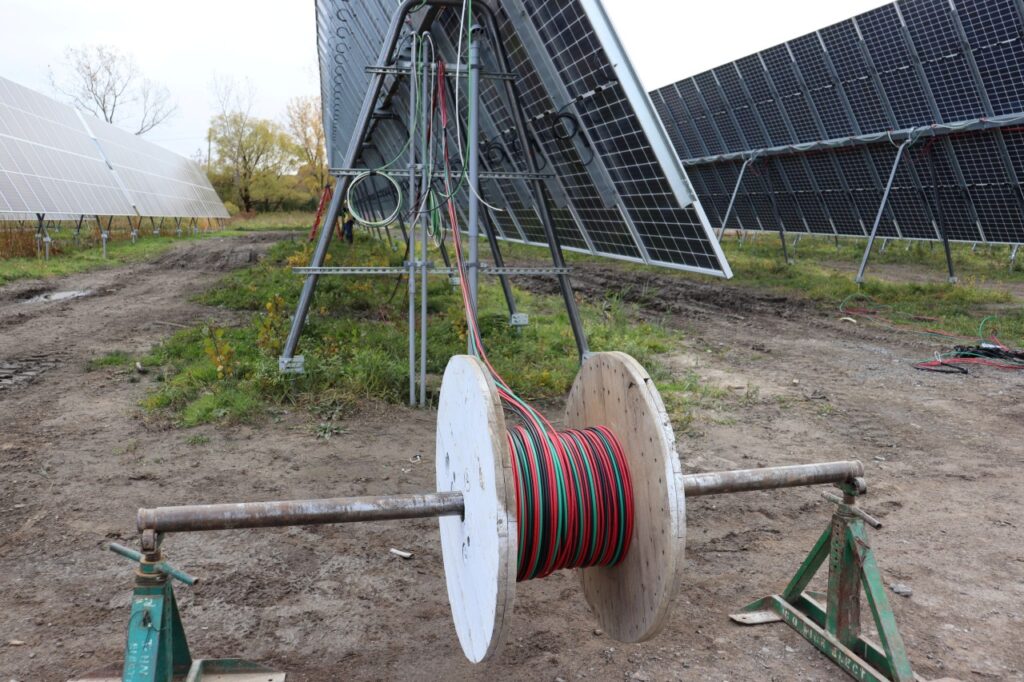
Years ago, workers would have to carry individual strings of PV wire down long aisles of panels to connect everything. Today, manufacturers like Sun-Pull offer customized PV wire bundles on single spools, cutting installation times and labor costs. 

Pre-bundled PV wire gives solar developers the option to do more with less. For example, what used to take a crew of workers a day to complete now only needs a couple of hours with 2-4 people. Sure, bundled wire costs more, but it makes up for the higher price with faster project speed and better resource allocation. 

Meanwhile, workers use connectors attached to the ends of PV wire to safely and tightly connect the wiring to the panels. Depending on the project and timeline, manufacturers like Sun-Pull can attach factory-made connectors to the PV wire. While it isn’t an exciting feature, it guarantees that one type of connector is used throughout the site. If crews accidentally use multiple connector types, the risk of poor or loose attachments spikes, potentially creating performance and fire risks. 

Pre-fabricated connectors also eliminate potential failure points in the field. Workers have varying levels of job experience, and installation quality varies from one worker to the next. If the connection isn’t tight or if an uncaught mishap occurs, it could lead to arcs, sparks, or system faults. 

Manufacturers quality control every product leaving the facility, giving solar EPCs peace of mind on the jobsite. This level of control in the process guarantees the connectors will work as intended for years to come. 

Wire Management 

From clips and clamps to ties and straps, utility-scale PV projects have no shortage of wire management options. 

At their core, management systems protect PV wires from potential dangers, including accidental contact, severe weather, and environmental hazards. Depending on the environment, budget, and application, project managers have a bevy of shapes, sizes, and materials available. This allows developers to choose what works best for them, from simple cable ties and S-clips to more complex conduit trays. 

DC Combiner Box 

Combiner boxes are as unique as the solar site itself. To that end, manufacturers can design and build boxes for every specific need. 

The process for that is straightforward but requires pre-planning. Customers must have exact specifications for what they need, which the manufacturer uses to build the box. This includes installing surge protectors, fuses, and terminated wire harnesses to safely collect and combine electricity. 

After strict quality testing, the manufacturer ships the combiner box directly to the jobsite for installation. 

Protecting the Bottom Line 

Finding cost savings on community- and utility-scale solar projects helps developers save money far beyond their current projects. 

Of course, it’s also safe to say that not every project will benefit from the same solutions. Every location has unique opportunities and challenges impacting available options. 

Modular systems and automated processes hold several advantages over traditional construction industry methods. Robots installing pre-made parts move much faster than a crew of workers, with the added benefit of checking their work along the way. This frees crew members to focus on other parts of the project that may need additional attention. 

Pre-made parts reduce the impact of weather during construction and make sites safer. In a factory setting, manufacturers control production in a stable, consistent environment. Once workers test the components, they can connect them like a huge set of building blocks. 

Higher Quality, Less Hassle 

In manufacturing facilities, quality is critical. 

Factories can QC and QA all components before they leave the factory, reducing the threat of poor installation. This is especially true for PV wire, connectors, and other sensitive equipment, where inexperience could hurt quality. 

More importantly, manufacturers are masters of high-level precision. They have the technology and resources to ensure everything fits, works, and performs as it should. By investing in prefabricated materials, crews only worry about installation. 

As a result, solar projects require fewer highly experienced workers to oversee everything, easing labor issues. 

Scaling Up 

When everything is modularized, it’s easy to scale up or down based on what parts you need. 

Standardization creates scalability, thanks to more accurate inventory tracking, maintenance procedures, and product acclimation for workers. As the team becomes more familiar with each piece of the puzzle and its processes, they move more confidently. The added speed means shorter timelines, more projects, and healthier bottom lines. 

Standard pieces and processes also affect cost structuring, as similar designs and situations may need similar inventories. Over time, familiarity leads to stronger forecasting and budgeting for future projects. 

Bottom Line Breakthroughs 

Solar projects aren’t cheap, but it’s possible to find cost savings and other bottom-line improvements. 

The industry has no shortage of innovative technologies hitting the market every year. For savvy solar developers, understanding the industry, building relationships, and staying on the cutting edge go a long way. 

For those builders, it means investing in automated solutions that reduce labor costs and improve safety. It also means reducing material costs through better planning and scalability without cutting corners. 

Solar development isn’t slowing down, even as the industry adjusts to rapid change. Those embracing the world around them will have an incredible leg up on the competition.

How Does Humidity Impact Solar Projects?

Summer is here, and that means three things: barbeques, beach vacations, and seemingly constant humidity. 

Humidity is everywhere, but location and environment play a role. For example, relative humidity in Florida, Texas, and Mississippi is higher than in Arizona, New Mexico, and Nevada. This is because the former states are located near large bodies of water, as opposed to arid deserts. 

Unfortunately, humidity is becoming a problem in the United States. According to a 2025 scientific study, humid heat waves have become stronger. As temperatures rise across the board, they lead to more water evaporation. As water evaporates, it increases humidity, which is bad for people, animals, and solar panels alike. 

Luckily, solar developers have several tools to prevent humidity and moisture from damaging their installations. Knowing how humidity works is the first step toward protecting sites from damage and lost output. 

What is Humidity? 

Humidity is an environmental condition measured by the amount of water vapor in the air at any given time. This moisture typically comes from water evaporating from bodies of water, but can also come from plants, soil, and rain. 

There are two types of humidity (absolute and relative), but relative is the one most people are familiar with. Relative humidity determines the percentage of water vapor in the air compared to its potential maximum. As temperatures rise, relative humidity decreases. As temperatures fall, the air holds less water vapor, creating dew and fog. 

Easy access to water sources results in higher humidity levels for those living in those regions. This is why Florida and Louisiana have higher levels than drier states like Arizona and New Mexico. High heat keeps relative humidity low since the air can hold more water vapor. 

Though humidity is a constant presence, it becomes more of a threat during the summer when temperatures rise. Hot air holds more moisture than cold air, which is why you don’t hear about humidity during the winter – the air is drier. 

How Does Humidity Impact Solar Sites? 

It might not sound like it, but as the air outside gets moister, the resulting humidity can slowly cripple a solar farm. 

And like many weather-based issues, it impacts every component from the ground up. 

Solar Panels 

When humidity is a concern, so is condensation. As temperatures retreat from their daytime highs, water vapor in the air forms droplets. Those droplets fall onto solar panels, mixing with dust and other gunk already there. 

As the water evaporates again, the dust left behind sticks to the panels and becomes hard to remove. If enough dust becomes stuck, panels may struggle to collect sunlight, reducing performance. The attached dust is also dried on, meaning crews must do more intense cleaning. 

Beyond simply making panels dirty, moisture can also become trapped inside panels. If that happens, water can create a film that could increase panel operating temperatures and hurt power generation. 

Reduced Performance 

Reduced performance comes in many forms, including Potential-Induced Degradation (PID). 

PID occurs when there’s a combination of hot temperatures and high humidity. When long strings of panels are tied together, those on the ends of the row carry the largest electrical pressure difference. These voltage differences between the solar cells and their frames may create small leakage currents. 

So, how exactly does humidity impact performance? When small leaks occur, rain and humidity increase system conductivity, leading to greater losses. It can also add stress to panels, as humidity fluctuations can leave water droplets on the panels’ faces. 

But sometimes performance issues stem from something simpler. Excess moisture can cause a wide range of problems when it gets inside a panel. For example, errant water can cause delamination inside the panel, along with mold growth in or on its face. In both cases, the panel can’t efficiently collect sunlight, limiting output. 

Wire and Connectors 

If moisture gets into a faulty, damaged, or improperly installed connector, it can immediately affect the system. 

Wet connectors are a breeding ground for short circuits and faults, which can drastically reduce output. However, water can also enter through cracks in damaged wire insulation. 

When moisture penetrates a PV wire’s insulation, it can damage the wiring. If installation or maintenance crews don’t spot the damage, it could lead to arcs, shorts, and faults. Worse yet, it could spark a fire, damaging nearby panels and racking. 

Racking 

Racking may not be exciting, but it’s critical to a solar project’s overall power generation. 

High humidity introduces moisture to the equation, which can ravage unprotected metal racking systems. Solar developers should either invest in corrosion-resistant materials or use coatings to make the racks resistant to corrosion. 

Without proper protection, the systems are more likely to rust and show wear while leaving the door open for mold growth. If mold or rust forms around tracking system components, it could prevent panels from moving with the sun. 

Preventing Damage from Humidity 

While it’s impossible to stop humidity from occurring, it’s possible to protect solar sites from damage. All it takes is a little preparation and patience. 

  • Invest in hydrophobic coatings. These specialized coatings repel water, preventing it from accumulating or entering sensitive areas.  
  • Keep up with cleaning. Regular maintenance cleaning removes dried bits of dust and other crud from solar panels. It also gives moisture fewer opportunities to create mud on the panels, reducing performance. 
  • Don’t skimp on seals. Seals prevent outside debris and moisture from entering solar panels and causing damage to sensitive components. 
  • Invest in high-quality PV wire products. Work closely with manufacturers that install connectors in-house and perform quality control testing. Unlike field-made connectors, which could be mistake-prone, employees test every connector to ensure a tight seal. This prevents moisture from entering through openings and shorting wires. 
  • Use the right wire for the job. Utility-scale solar projects are massive endeavors and long-term installations, so buy high-quality wire when possible. Invest in UL 4703-certified PV wire, as other types may offer less protection. PV wire can withstand harsh outdoor environments and is moisture, weather, abrasion, and UV resistant. 
  • Explore your conductor options. Copper is the most common PV wire conductor, offering good conductivity across many applications. Aluminum is lighter than copper and more affordable but needs larger gauges to match copper’s conductivity and may oxidize over time. Tinned copper offers better corrosion protection than copper alone, but developers will pay extra for additional peace of mind. 

Risk, Rewards, and Resilience 

Humidity is a necessary and important component of our natural environment. However, solar technology is rapidly improving to make solar projects more resilient against its effects. 

As products and methods improve, solar sites enjoy increased clean energy production, higher levels of safety, and longer project lifespans. Meanwhile, consumers benefit from low-cost renewable energy, utilities and operators produce more power, and sites generate higher ROIs. 

Solar sites require an incredible amount of planning, and no one knows everything. When questions pop up, know who to reach out to for advice and guidance. Oftentimes, this means reaching out to a trusted manufacturer or distribution partner. Their insight can simplify the installation process and make it easier to maintain products over their usable lifespan. 

This ultimately leads to better, more efficient projects that benefit everyone.

How Solar EPCs Can Collaborate with Communities

Solar development sometimes faces an uphill battle in getting buy-in from municipalities. 

Community members can distrust large-scale solar projects for many reasons. From concerns about rows of solar panels clogging picturesque views to fears about tanking property values, it’s a challenge.  

But perhaps the biggest issue solar EPCs face when working with small communities is a lack of communication. 

The Pitfalls of Poor Communication 

Unfortunately, poor communication can be dangerous for everyone involved. When stakeholders have concerns, it breeds mistrust, delays, and even opposition leading to canceled projects. 

On the flip side, sharing the right information at the right time can keep everyone aligned, making the process smoother. This means going beyond gathering rubber stamp approvals and actively participating in the community. 

Every community is unique, requiring developers to understand and embrace them in different ways. Being proactive and intentional with how we communicate, listening to and addressing potential concerns, and building trust are crucial. 

Why Communities Cast Shade on Solar 

It’s not that people don’t like solar energy development; they just don’t want projects too close to them. 

People call this fierce local community reaction to new projects NIMBY – Not in My Backyard. According to the Encyclopedia Britannica, NIMBY “connotes the unwillingness of individuals to accept the construction of large-scale projects by corporations or governmental entities nearby, which might affect their quality of life and the value of their property.” 

We first started hearing the acronym in the late 1970s, but social scientists didn’t adopt its use until the early 1980s. Since then, NIMBY has become a rallying cry for community groups concerned about negative development near their homes. 

But the truth is NIMBY concerns arise for many reasons. 

Aesthetics 

Renewable energy projects offer plenty of low-cost energy, but they aren’t exactly bastions of beauty. Although solar developers can’t change how panels and racking systems look, they can try hiding them. 

Typically, this includes beautification efforts like creating region-specific landscapes and pollinator habitats. Though neither completely obscures the panels from view, they go a long way toward helping them blend in. 

Location and Size 

Community-scale solar sites are smaller than utility-sized installations but are still large. 

The sheer size of these projects can overwhelm rural communities despite benefiting from the electricity produced. People may be afraid that the land won’t be usable for farming or grazing purposes. 

Sites may also be visible from the roadside, affecting scenic rural views. 

Tanking Property Values  

Some homeowners living near solar farms believe their property values will slump. 

However, a recent Virginia Tech report analyzing nearly 9 million home sales near solar sites discovered some interesting data. According to them, farm and vacant land within two miles of solar sites increased in value by 19%. 

VT’s data is more complicated for residential properties. Homes within three miles of solar sites saw a 4.8% drop in value. However, losses were mitigated by larger lot sizes, more distance, and project age. 

Land Use Worries 

While many developers aim to build on unattractive, inexpensive land, sometimes the best locations are situated on agricultural land. 

When farmland becomes the focal point for development, some people may see it as a waste or an attack on local farmers. They think farmers could be using the land for crops or animals and are missing out because of the solar panels. 

Partisan Politics (Us vs. Them) 

Politics can divide people, but they may also galvanize communities against outside threats. 

The idea is that corporations and large-scale companies will come in and ruin the rural way of life. For some, it could mean destroying the landscape. For others, it may be the thought of rural communities bearing the brunt of a project so other communities and companies can benefit. 

Worse yet, the project could draw the ire of folks who believe new solar jobs could be temporary. This may leave community members questioning the project’s value. 

Good Ol’ Fashioned Misinformation 

Mark Twain once said, “A lie can travel halfway around the world while the truth is putting on its shoes.” 

From tales of toxins leeching into the water to talk of solar panels damaging the land, misconceptions are everywhere. But rumors and stories can quickly obscure the truth about renewable energy.  

Though some concerns are malicious and meant to derail projects, many are simply misconceptions. In large part, these rumors typically stem from a lack of solar education coming from trusted experts. 

Forging Relationships 

No matter how you slice it, the problem remains – people in small, rural communities don’t trust developers. 

When solar EPCs approach rural projects, they must look beyond the X’s and Os. Any large-scale electrical generation project is a massive undertaking and can drastically change communities. 

Listening to community members and understanding their needs goes a long way. As both sides build trust, it opens doors for more effective communication and stronger partnerships. 

But what does collaboration with a small community look like? 

Find Sites That Work for Everyone 

Look for sites that could benefit from revitalization, like brownfields, industrial sites, or undesirable land. Avoid important community areas, like working farmland or popular animal habitats. 

Work with community groups and other organizations to promote environmental practices. From agrovoltaics and ecovoltaics to soil erosion and habitat protection, companies have many worthy causes to pursue. 

Additionally, find ways to beautify the land and generate power without imposing on nearby properties. 

Practice Active Listening 

Solar projects are a huge commitment for rural communities. Developers should aim to integrate themselves into the region. 

This should occur early in the project, particularly during the planning and development phases. Ask for input from local leaders, homeowners, policymakers, and citizen groups, and be attentive to their needs. These people may become advocates for the project and should be in the loop throughout its development. 

Creating collaboration opportunities also means building relationships with local groups that can engage others on your behalf. Their goal is to fill information gaps and address blind spots well before shovels hit the dirt. 

Reach People Where They Are 

Project development for community- and utility-scale solar sites involves years of planning. 

Attending public forums, listening proactively, addressing concerns honestly, and sharing data and insights are critical to building trust. Solar EPCs should also consider using multiple types of media to inform stakeholders. 

People don’t consume only one type of information. Invest in physical, digital, and in-person methods to reach people in the forums they’re active in. Every touchpoint is an opportunity to address concerns, educate, and offer critical updates. 

Address Misinformation Early 

People naturally have questions about renewable energy generation, but not every fear is factual. 

When questions and rumors arise, answer honestly and actively listen to citizens. With that said, be ready to combat misinformation with facts, figures, and trusted sources. 

Without accurate data, citizens are less likely to support long-term projects. The result could be delays, opposition, political pushback, and even cancellation. 

Build Strong Partnerships 

Start building meaningful relationships with local organizations, utilities, community groups, and politicians. They’ll be able to help with the approval process and keep everything moving smoothly. 

It starts with learning who the key stakeholders are and working closely with them. Potential partners include neighborhood groups and business organizations, non-profits, colleges, and even farming associations. 

Making inroads with local organizations provides solar EPCs with more viewpoints and information. 

Honesty is the Best Policy 

NIMBY relies on the idea that citizens don’t trust large-scale developers. 

To break the stigma and promote collaboration, share information freely. Provide as much information as possible and offer it in ways that are easily accessible, digestible, and well-sourced. Try to avoid heavy-handed industry jargon that causes eyes to glaze over – focus on real-world examples for proof. 

Additionally, take time to consider how setting up a renewable energy generation plant will impact people. Take the time to highlight the positives of these projects once they’re complete, including permanent jobs, low-cost power, and tax benefits. 

Discuss Community Benefits Agreements (CBAs)  

A CBA is a legal agreement between a developer and the community, covering everything the community will receive by supporting (or not opposing) local development. 

Towns that sign a CBA earn several concessions in the form of investments. For example, towns could receive new parks, greenspaces, or community centers, or negotiate for better energy costs. Municipalities could also receive funding for low-income programs, workforce education, and other initiatives. 

Beyond standard legal agreements, being a good neighbor means integrating into the community. Companies can sponsor events, host open houses, and create programs allowing citizens to participate in the project’s long-term success. 

Collaboration vs. Competition 

Solar development shouldn’t be a battle. 

Developers should pay attention to citizens and work openly with community organizers to create positive outcomes for everyone. Building rapport with citizens and advocacy groups often streamlines projects, reduces delays, and improves stakeholder relations. These partnerships, if strong enough, also help fight negative press, creeping misinformation, and other showstoppers. 

Clean energy is part of the future, but only if everyone is on board. Better, deeper, and more honest partnerships get us all where we want to go.